
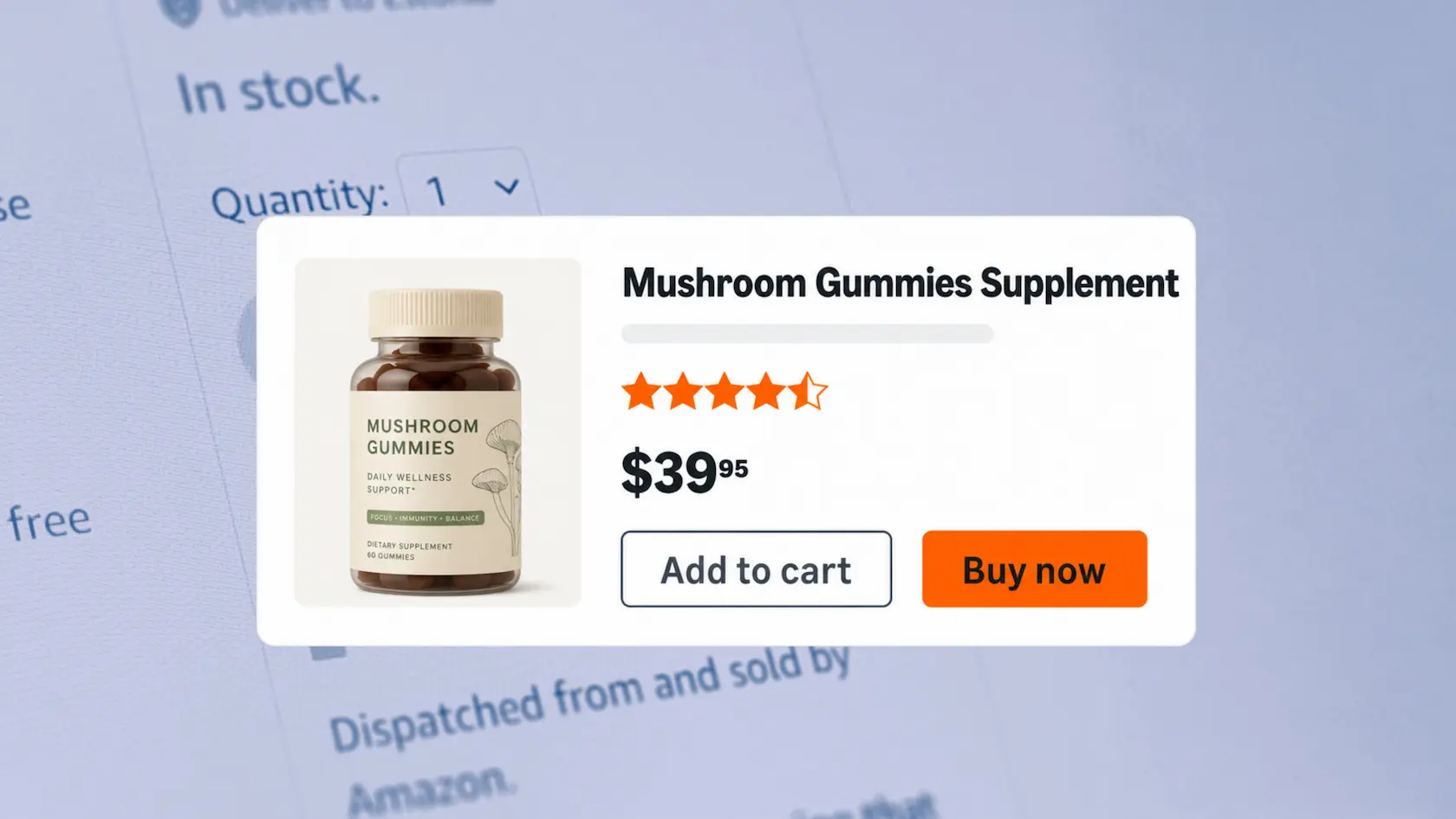
Amazon is changing how the Featured Offer works, the placement most sellers still call the Buy Box, and the change affects every brand on the platform. Here is the accurate version, because the announcement has already produced a lot of confusion: Amazon removed the seller-level eligibility gate for the Featured Offer. It did not remove the performance standard that decides which offer wins.
That distinction is the whole story. The change is not that everyone now wins the Buy Box. It is that every offer can now be evaluated, regardless of whether the seller previously met the eligibility criteria. Winning still depends on the same signals it always did. At HatchEcom, we work with brands entering the US through Market Entry, and this is the kind of platform shift that looks alarming in a headline and turns out to be manageable once you read it precisely.
This article explains exactly what changed, what did not, who it helps, and what your brand should audit before the rollout reaches your ASINs.
What Exactly Changed in the Amazon Featured Offer Process?
Until now, Amazon used a two-step process to decide which offer appears in the Add to Cart and Buy Now area. First, it determined which sellers were eligible to compete for the Featured Offer based on performance criteria. Second, it compared the offers from that eligible group and selected which one to show.
Starting in July 2026, Amazon began removing the first step. The rollout is gradual across all global stores and should complete before the end of 2026. Existing offers are included automatically, so sellers do not need to request access or take any specific action.
The clearest way to state the change is this: Amazon removed the separate seller eligibility gate. Every offer can now enter the ranking stage. The structure moved from seller eligibility, then offer ranking, then Featured Offer, to a simpler flow where all offers go straight to ranking and then to Featured Offer selection. If the mechanics of how Amazon evaluates sellers are new to you, How Does Amazon Seller Work? What Brands Need to Know Before Entering the U.S. Market covers the fundamentals this change sits on top of.
What Amazon Did Not Change
Amazon was explicit that it is not changing the mechanism it uses to select the winning offer. Being evaluated is not the same as being selected, and this is where most of the confusion around the announcement comes from.
The winning offer is still chosen based on the same signals:
- Competitive pricing, measured against internal and external references.
- Total cost to the customer, including shipping.
- Delivery speed and reliability.
- Seller performance.
- Customer experience.
- Inventory availability.
Competitive pricing here means the landed price, the total the shopper pays including shipping, which is also the number that governs how efficiently your ads convert, as we covered in Amazon PPC Match Types: Which to Use at Each Stage of Your ASIN. In other words, Amazon did not remove performance from the equation. It removed a pre-filter and now uses those same signals directly during offer ranking. Any content claiming that Amazon eliminated performance requirements is simply wrong. The eligibility gate is gone. The performance standard is not.
Who Does the Amazon Buy Box Change Actually Help?
The sellers most likely to benefit are the ones who previously could not enter the competitive pool at all. An offer that used to be excluded for failing the general eligibility threshold can now be ranked against the others.
This can specifically help new sellers without enough history, sellers with limited volume, brands that lost eligibility generally even when some ASINs were competitive, brand owners who are the only seller of certain products, and accounts that recovered their metrics after an operational issue.
There is an important limit on this, though. Amazon did not specify which internal thresholds it is dropping, and it did not publish the weight of each signal in the new ranking. So it is not yet accurate to say the change automatically favors new or weak-performing sellers. They can be evaluated now. Whether they win still depends entirely on the strength of their offer.
The Real Risk: More Competition Inside Shared ASINs
The most probable consequence of this change is increased competition within shared ASINs. As the pool of evaluated offers widens, a seller who previously could not compete may start contesting the Featured Offer if their offer presents a lower landed price, faster delivery, better availability, or more reliable fulfillment.
For a brand that fully controls its distribution and is the only legitimate seller, this should not change much. But it can matter for brands with multiple distributors, unauthorized resellers, gray-market inventory, significant price differences across sellers, FBM and FBA competing within the same ASIN, or a lack of MAP enforcement. This is an operational inference based on the removal of the pre-filter, not a direct statement from Amazon, but it follows logically from a wider evaluation pool. Managing this well across a catalog does not require a big team, it requires a disciplined process, which is the case we made in The Small Team Playbook for Scaling Amazon.
There is a related effect worth noting. If more offers can participate, the Featured Offer may change hands more often, because the system has more alternatives to choose from as stock, price, shipping promise, fulfillment method, and buyer location shift. For brands with several sellers on an ASIN, that can mean more rotation of the Featured Offer between offers.
What Should Brands Audit Now?
Before the rollout reaches your ASINs, a focused audit tells you whether this change is neutral for your brand or something to act on. At HatchEcom, we run it as five checks. It is the same audit our team, a group you can read more about on our About Us page, runs when onboarding a brand with a complex seller landscape.
| Audit Point | What to Look At | Why It Matters |
| Featured Offer percentage by ASIN | Hero ASINs, bundles, variations, multi-seller products, high-traffic low-conversion items | The account average hides the ASINs where you are actually losing the placement |
| Distribution and active sellers | Who sells each ASIN, who controls inventory, who uses FBA, who is below MAP | Identifies which offers may now start competing that could not before |
| Landed price | Total price including shipping, not just the visible price | A lower visible price can still lose to a better total cost or delivery |
| Delivery promise | FBA vs FBM, speed, free shipping, delivery certainty, regional stock | Amazon favors offers with fast, free, and predictable delivery |
| Account Health and customer experience | Authenticity, damage, product condition, chargebacks, delivery experience | Performance still influences selection even without the eligibility gate |
The audit answers one practical question: if more offers can now compete on your ASINs, are you positioned to keep winning the placement on the products that matter most to your revenue? If some of those ASINs are also underperforming on organic visibility, it is worth checking whether the cause is structural, something we covered in How to Change Your Amazon Browse Node and Recover Lost Rankings.
Does This Change Make FBA Mandatory?
No. Amazon states that a fulfilled-by-merchant offer can be as competitive as an FBA offer when it delivers equivalent speed, free shipping, and delivery certainty. The change is not that Amazon now favors FBM, and it is not that FBA became mandatory. It is that Amazon evaluates more offers, and fulfillment execution remains central to which one wins.
In practice, FBA still tends to make competitive delivery times, logistical predictability, customer service, returns handling, and Prime availability easier to achieve. So while FBM can win, the fulfillment bar it has to clear is the same one FBA is built to meet.
What We Still Do Not Know
Responsible coverage of this change has to be clear about its open questions, because Amazon has not published everything. As of now, Amazon has not stated the exact activation date for each account or marketplace, which metrics made up the old seller eligibility gate, how the relative weight of performance will shift within the ranking, whether the number of sellers winning the Featured Offer will measurably increase, whether there will be new reports or columns in Seller Central, or how much Featured Offer rotation will change.
This matters because it sets the boundary of what any brand can act on today. The reliable facts are that the eligibility gate is being removed, that performance still drives selection, and that a wider pool of offers will be evaluated. Everything beyond that is reasonable inference, and it is worth treating it as such rather than as confirmed policy.
Frequently Asked Questions
Can everyone win the Amazon Buy Box now?
No. Every offer can now be evaluated for the Featured Offer, but winning still depends on competitive pricing, delivery speed, fulfillment reliability, inventory availability, and seller performance. Removing the eligibility gate widened who gets considered, not who wins.
Did Amazon remove performance requirements for the Buy Box?
No. Amazon removed the separate seller eligibility gate that decided who could compete. It did not remove performance from the selection. The same signals that always determined the winning offer still apply during ranking.
Does this change force sellers to use FBA?
No. A fulfilled-by-merchant offer can compete with an FBA offer when it matches on delivery speed, free shipping, and delivery certainty. FBA often makes those easier to achieve, but it is not required to win the Featured Offer.
Should brand owners be worried about this change?
For brands with clean distribution and consistent pricing, the change is largely neutral and can even help if you are the only seller on an ASIN. For brands with multiple sellers, unauthorized resellers, or pricing inconsistencies, it is worth auditing your ASINs before the rollout reaches them, because more offers may start competing for your placements.
The Gate Is Gone. The Standard Is Not.
The accurate reading of this change is narrow and important. Amazon removed the separate seller eligibility gate, but performance still influences which offer is selected. For most well-run brands, that is either neutral or a small opening. For brands with messy distribution or inconsistent pricing, it is a reason to look closely at their catalog before the rollout arrives.
The brands that treat this as a prompt to audit their seller and pricing situation will be positioned well regardless of how the rollout behaves. At HatchEcom, our Growth Team runs exactly this kind of Featured Offer and distribution audit for the brands we manage. If you want to understand where your top ASINs stand before the change reaches them, book a call with the team.
The eligibility gate is gone. The performance standard is not. The brands that internalize that difference are the ones that will keep the placement when the pool of competitors widens.