
Amazon
is changing its product title requirements again. This time, the new character limit is only one part of a much larger catalog update.
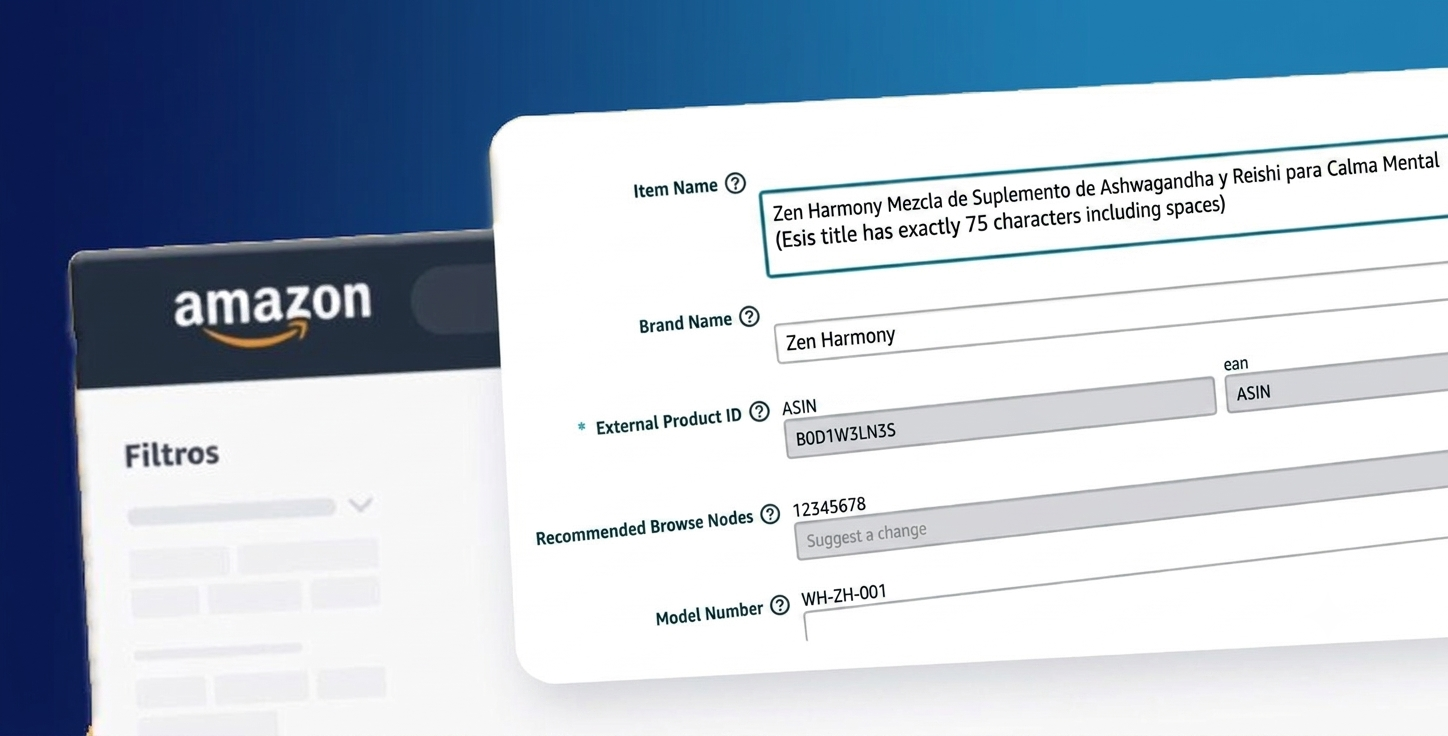
Starting Jul 27, 2026, Amazon product titles across all non-media categories will need to contain 75 characters or fewer, including spaces. Amazon is also introducing an Item Highlights field with up to 125 additional characters for information such as materials, recommended uses and product features.
On paper, the change appears straightforward: the information previously placed inside a title of up to 200 characters will be divided between a shorter title and a supporting field.
For brands, however, this is a major catalog, SEO and operational decision.
For years, sellers have used Amazon product titles to hold their most important keywords, product attributes, differentiators, quantities and use cases. The new structure forces brands to decide which information is essential to identifying the product and which information supports the purchase decision.
That distinction may influence how products appear in search results, how customers compare options on mobile and how Amazon’s systems interpret catalog information.
What is changing with Amazon product titles on July 27, 2026?
Amazon has announced four central changes to its product title structure.
First, product titles in all categories except media will be limited to 75 characters, including spaces. Books, DVDs and other media products are excluded from the announced rollout.
Second, sellers will receive access to a new Item Highlights field. This field will provide up to 125 characters for supporting information such as materials, product applications, recommended uses and other details that help customers evaluate the product.
Amazon says Item Highlights will be searchable and may appear alongside the title in search results and on product detail pages.
Third, Amazon will offer AI-powered recommendations inside Manage All Inventory. These recommendations will help sellers generate compliant product titles while moving additional information into the Item Highlights field.
Finally, Amazon plans to update noncompliant titles gradually after July 27. According to the announcement, affected listings will remain active. Amazon may generate a revised title and Item Highlights recommendation, while eligible brand owners will receive a 14-day period to review, edit or approve the proposed content.
The primary risk is therefore catalog control.
Brands that leave their titles unchanged may allow Amazon’s AI to determine which product information remains inside the most prominent 75 characters.
Why is Amazon shortening product titles?
Amazon has pointed to two direct objectives: improving the display of complete titles on mobile devices and creating greater consistency across online shopping experiences.
Long product titles are frequently truncated on smaller screens. Important differentiators can disappear before the shopper sees them, while repeated keywords and secondary information make listings harder to scan.
The updated structure gives each content field a more specific role.
The title identifies the product. Item Highlights provides additional comparison information. Bullet points explain benefits and features. Structured attributes support filters and catalog interpretation. A+ Content builds context and visual storytelling.
This structure can create a clearer shopping experience, but it also makes prioritization unavoidable.
Under the new limit, brands will have less room to compensate for weak catalog architecture by adding more information to the title.
The Amazon title update is part of a larger catalog evolution
The 75-character limit is the latest step in Amazon’s broader effort to standardize, generate and interpret product data.
In 2024, Amazon expanded its generative AI listing tools, allowing sellers to generate titles, descriptions and product attributes from limited information. By the end of that year, Amazon reported that more than 500,000 selling partners had used these tools.
Amazon also launched Rufus in February 2024. The shopping assistant was designed to interpret Amazon’s catalog, customer reviews, community questions and information from across the web to answer product questions and compare options.
In January 2025, Amazon introduced more consistent title requirements. Most categories received a 200-character maximum, certain special characters were restricted and most words could appear no more than twice.
By late 2025, Amazon reported that more than 250 million customers had used Rufus. The company also reported significant year-over-year growth in users and interactions.
In May 2026, Rufus became Alexa for Shopping. Amazon stated that its shopping assistant had helped more than 300 million customers research, compare and purchase products during 2025.
Amazon has not presented the 75-character limit as a direct consequence of AI-assisted shopping. The direction of the platform, however, is increasingly clear: Amazon is building a catalog that can be interpreted consistently across search results, mobile experiences and conversational shopping interfaces.
Clean, structured product data is becoming more valuable than simply placing a large number of keywords inside one field.
How will the 75-character title limit affect Amazon SEO?
One of the most important questions for sellers is whether keywords placed in Item Highlights will have the same influence as keywords placed in the product title.
Amazon has confirmed that Item Highlights will be searchable. It has not confirmed that both fields will carry the same ranking weight.
Those are different concepts. A searchable field may help Amazon match a product with a customer query while still carrying a different level of relevance, display priority or influence on click-through rate.
Brands should therefore avoid treating the update as a simple copy-and-paste exercise. Moving every removed phrase from the title into Item Highlights preserves the language, but it may not preserve the title’s previous search or conversion performance.
The first 75 characters should be selected using real customer and performance data.
Brands should review:
- Search Query Performance data
- Amazon Brand Analytics
- Advertising search terms
- Organic ranking by priority keyword
- Click-through rate by query
- Conversion rate by variation
- Customer questions and recurring purchase criteria
- Variation-level performance
The objective is to preserve the terms and attributes that identify the product, match valuable searches, differentiate the ASIN and reduce customer confusion.
A shorter title built around relevant buying criteria can generate stronger results than a longer title filled with broad, high-volume keywords.
What information belongs in a compliant Amazon product title?
There is no universal title formula that works across every Amazon category. A supplement, automotive component, beauty product and consumer electronics item each require different information to support identification and purchase confidence.
For wellness supplements, a practical title structure could be:
Brand + Ingredient or Product Type + Strength or Form + Count
Example
Previous title:
Wellness Brand Magnesium Glycinate Supplement for Sleep, Stress Support and Muscle Recovery, 120 Vegan Capsules, Non-GMO
Updated title:
Wellness Brand Magnesium Glycinate, 120 Vegan Capsules
Item Highlights:
Designed to support relaxation, sleep quality and normal muscle function. Non-GMO formula.
Product claims must continue to be accurate, substantiated and compliant with Amazon’s category requirements. The shorter title format does not change advertising, labeling or product claim policies.
The same prioritization logic applies across categories:
- For an automotive product, compatibility information may be essential because removing it could increase incorrect purchases and returns.
- For a beauty product, shade, finish or format may be necessary to distinguish one variation from another.
- For a supplement, ingredient, strength, delivery format and quantity may deserve priority over broader lifestyle language.
The right 75 characters depend on how customers identify and choose the product.
The biggest operational risk is losing control of the catalog
Amazon has indicated that noncompliant titles may be updated using AI-generated recommendations rather than being cut automatically at character 75.
This means Amazon’s system will make decisions about which information stays in the title and which information moves into Item Highlights.
An automated recommendation could remove a productive keyword, simplify an important product distinction or select the wrong variation attribute. For Brand Registry accounts, the 14-day review period becomes an important catalog-control workflow.
Someone inside the organization should be responsible for:
- Reviewing Amazon’s proposed title
- Checking Item Highlights for accuracy
- Confirming all product claims
- Protecting high-value keywords
- Checking variation consistency
- Monitoring the live detail page
- Reviewing View Change History
A compliant submission does not always guarantee that the intended title will remain live. Catalog contributions from resellers, distributors and other authorized contributors may continue to influence product information.
Brands should monitor both compliance and content ownership.
How should large Amazon catalogs approach the update?
For brands with hundreds or thousands of ASINs, the challenge extends beyond rewriting copy.
Sellers have already raised questions about whether Item Highlights will be supported through flat files, bulk uploads, APIs and third-party feed management platforms. Some sellers have reported saving errors, unsupported attribute messages or inconsistent field behavior during the rollout.
Large catalogs should use a risk-based prioritization system.
Begin with:
- Top-selling ASINs with titles above 75 characters
- Heavily advertised products
- Products responsible for a large share of branded search traffic
- Parent and child variation families
- Products in regulated categories
- ASINs with compatibility or sizing requirements
- Listings with multiple catalog contributors
- Products launching close to the implementation date
Long-tail ASINs can follow once high-revenue and high-risk listings are under control.
This approach gives teams time to understand how Item Highlights behave in their category before applying the same process across the entire catalog.
What should brands do before July 27, 2026?
The strongest preparation plan combines catalog auditing, search data, content hierarchy and performance tracking.
- Exportand audit the complete catalog
Export all active ASINs and count every title character, including spaces. Flag titles above 75 characters and identify products that are close to the limit. Confirm whether category-specific rules or required attributes affect each product type.
- Builda product attribute hierarchy
For every major product category, determine which attributes must remain in the title and where secondary information should live.
Separate content into:
- Essential identification information
- High-value search language
- Supporting comparison details
- Structured catalog attributes
- Bullet-point content
- A+ Content
- Product FAQs
This prevents teams from making title decisions one ASIN at a time without a consistent framework.
- Useperformance datato choose the title content
Review the queries and attributes that currently drive impressions, clicks and conversions.
Search volume alone should not determine which words remain. A lower-volume term that communicates an essential product feature may produce more qualified traffic and stronger conversion.
- Preserve a performancebaseline
Before making changes, record:
- Search impressions
- Click-through rate
- Conversion rate
- Search Query Performance
- Advertising performance
- Branded and non-branded traffic
- Variation-level sales
This baseline will help teams determine whether performance changes are connected to the title update or to other marketplace factors.
- Updatelistings in controlled groups
Avoid changing the entire catalog at once.
Start with a representative group of ASINs, monitor the results and refine the title framework before expanding the rollout.
Check how the updated content appears across:
- Mobile search results
- Desktop search results
- Product detail pages
- Sponsored placements
- Parent and child variations
- View Change History
- Createan ongoing monitoring process
July 27 is the beginning of the rollout, rather than the end of the project.
Teams should continue checking titles, Item Highlights and catalog contributions after implementation. AI-generated recommendations, category adjustments and new bulk-management options may continue to evolve.
What this update means for the future of Amazon listings
Amazon is moving toward a catalog where every content field has a clearer purpose. The product title identifies the item. Item Highlights adds concise comparison context. Bullet points explain features and benefits. Structured attributes support filters and machine interpretation. Reviews and Q&As provide customer evidence. Alexa for Shopping brings these signals together to answer product questions.
For brands, success will depend on coordinating all of these fields rather than optimizing each one independently.
The strongest listings will make it easy for customers and Amazon’s systems to understand:
- What the product is
- Who it is designed for
- Which problem it addresses
- How it differs from competing options
- Which variation the customer is viewing
- Why the product is relevant to the search
The strategic question is no longer how much information can fit inside the title.
It is which information deserves to occupy the first 75 characters.
Frequently asked questions about the Amazon product title update
What is the Amazon product title character limit in 2026?
Starting July 27, 2026, product titles in all affected Amazon categories must contain 75 characters or fewer, including spaces. Media categories are excluded from the announced rollout.
Will Amazon suppress listings with titles longer than 75 characters?
Amazon says affected listings will remain active. Titles above the limit may be updated gradually using Amazon’s AI-generated recommendations.
What are Amazon Item Highlights?
Item Highlights is a new field offering up to 125 characters for materials, recommended uses and other supporting product information. Amazon says the field will be searchable and may appear in search results and on product detail pages.
Do Item Highlights replace Amazon bullet points?
Item Highlights complement the title. They remain separate from the listing’s bullet points, structured attributes, product description and A+ Content.
Are keywords in Item Highlights indexed?
Amazon describes Item Highlights as searchable. The company has not confirmed whether keywords in this field receive the same relevance weight as keywords placed in the product title.
Can sellers edit Amazon’s AI-generated title?
Eligible brand owners will receive a 14-day period to review, modify or approve applicable recommendations. Sellers can also manage titles and Item Highlights through Manage All Inventory.
Does the title limit apply to parent and child ASINs?
The limit applies to titles in affected categories. Variation families should be reviewed carefully because attributes such as size, color, flavor and quantity may influence the title displayed for individual child ASINs.
Can Item Highlights be updated in bulk?
Bulk support may vary by account, category and stage of the rollout. Brands managing large catalogs should verify the options available through flat files, APIs and third-party feed platforms before planning a full migration.
Should brands update product titles before July 27?
Updating priority ASINs before the deadline gives brands more control over which information remains in the title. It also creates time to evaluate performance, validate Item Highlights and resolve catalog issues before Amazon begins applying automated recommendations.
Prepare your Amazon catalog with a controlled, data-led process
The 75-character update affects more than listing copy. It touches Amazon SEO, catalog governance, product data, variation structure, advertising performance and the way AI-powered shopping systems interpret your products.
At Hatch, we help brands audit their Amazon catalogs, prioritize high-impact ASINs and build compliant listing structures around real search and conversion data.
Need help preparing your catalog before the new title requirements take effect?
Talk to our team to review your Amazon titles, Item Highlights and catalog strategy before the rollout.