
What AI Does to Brands That Have Nothing to Say

Most conversations about AI in ecommerce focus on efficiency: what it can automate, what it can produce faster, what it replaces in the operational stack. That’s a valid conversation. But it’s not the most important one. The conversation that receives far less attention is what AI does to the market when everyone uses it simultaneously — and what happens specifically to brands without a clear position when that occurs. Because AI doesn’t just change how brands operate. It changes what differentiates them. What AI Has Leveled AI democratized production. Sharp copy, consistent content, polished design, optimized listings, customer response workflows, competitive analysis — all of it is now accessible to any brand with the right tools and a reasonable budget. That’s genuinely good news for smaller brands that previously couldn’t match the execution quality of larger competitors. And it’s genuinely disruptive for the market overall, because what used to separate a well-resourced brand from an under-resourced one — the quality of its content, the consistency of its voice, the polish of its execution — no longer separates anything. When everyone has access to the same production level, production stops being a competitive advantage. It becomes the floor. Brands that built their differentiation on execution quality are now competing with every brand that can run a prompt. That is a fundamentally different competitive environment than the one they were built for. When AI makes everyone look the same, the only thing that differentiates is what cannot be generated with a prompt. What AI Cannot Produce There are things no model can generate because they don’t exist in any training dataset: the judgment that comes from having operated in a market for years, positions taken before they were popular, the conversations a brand had with its audience when no one else was having them. That is what builds real trust. Not the quality of the copy — the consistency of the point of view over time. A brand that has spent three years writing about why quality in their category is systematically misrepresented, or why the conventional wisdom on a buying decision is wrong, has something no AI can replicate: a track record of having arrived early, of having said something before it was easy or obvious to say, of having maintained a position when most were looking the other way. That track record is not produced in a prompt. It’s built through accumulated decisions — what to publish, what position to take, what to say when no one is asking yet. The Trust Filter AI Activates When everything looks the same, buyers activate trust filters that were previously secondary: Who do I already know in this category? Who have people I trust talked about? Who has something to say that isn’t just a variation of what everyone else is saying? Those filters always existed. What AI did was make them more decisive, because the noise requiring filtering multiplied. This plays out directly in how AI recommendation systems respond to brand queries. When someone asks ChatGPT or Perplexity for a recommendation in a category, the models aren’t evaluating which brand has the best current ad spend or the most optimized listing. They’re surfacing brands with the clearest, most consistent, most corroborated signal across the sources they’ve processed. Brands with a defined position — a recognizable point of view, consistent external references, content that has been building a coherent picture over time — get recommended. Brands that produced a lot of generic, well-executed content that sounds like every other brand in the category get omitted or described vaguely. The filter is not about volume. It’s about signal quality. And signal quality is a function of position clarity. Brand Equity as a Structural Moat In a generalized AI environment, brand equity becomes the only competitive asset that cannot be replicated with a tool. Not because brand is intangible or hard to measure — it’s neither — but because it’s built with time, and time cannot be purchased. A brand that spent years being consistent, specific, and willing to take positions has a structural advantage that no competitor can acquire overnight, regardless of how much AI they deploy. Sales conversion rates are already falling for many brands as AI-generated alternatives and zero-click experiences reduce the friction of comparison. Trust is eroding in categories where AI-produced content has flooded the information environment. And buyers are increasingly concentrating their confidence in a small set of brands that earned their position before it was urgent to have one. The question for any brand operating in a competitive market today is not whether this shift will affect them. It’s which side of the trust filter they’ll be on when it does. The brands that will maintain their position in the AI era are not the ones with the best AI tools. They are the ones that built something those tools cannot produce. What You Can Do About It Positioning is not a rebranding project. It doesn’t require a new visual identity or a brand workshop. It requires three things that can start now. A consistent point of view. Pick two or three things you believe about your category that are true, specific, and not universally accepted. Write about them consistently — not to generate traffic, but to build a signal that compounds. External corroboration. AI systems weight third-party references more heavily than owned content. Press coverage, industry publications, expert citations, marketplace reviews — these are the signals that establish you as a reliable entity in AI-processed information environments. Signal alignment. Your Amazon listing, website, social presence, and press coverage should all describe you in compatible terms. Fragmented signals produce vague AI representations. Coherent signals produce confident ones. None of this is complicated. All of it requires consistency over time — which is exactly why most brands skip it in favor of whatever is producing results this quarter. How does AI currently represent your brand? HatchOmni AI — HatchEcom’s
How to evaluate market opportunity in a U.S. product category

A category can be growing 15%, 20%, even 30%, and that number alone tells you almost nothing about whether you should enter it. Growth is the first thing brands look at when they evaluate a US market opportunity, and it is also the thing most likely to mislead them. Here is why. If a category is growing but the number of brands is growing faster, if ad costs are climbing, prices are compressing, and the top five players already own most of the demand, then that growth may not represent an opportunity for a new entrant at all. It may represent a more expensive, more crowded version of the same fight. When we help brands assess whether a US category is worth entering, we start from a simple distinction: category growth tells you demand is expanding, but it does not tell you whether your brand has a viable way to capture that demand. This is the same discipline behind US Market Opportunity Assessment: The Question That Changes How You Plan, and this article walks through how to read the difference. Where should you start when evaluating a category? Start with demand, but do not stop there. Demand is the entry point of any market opportunity analysis, and it is worth understanding in detail: sales growth, search growth, category penetration, repeat purchase, and how fast the channel itself is growing. These signals tell you whether consumers want more of what the category offers. But demand growth is only one side of the equation, because a category can be expanding and becoming harder to capture at the same time. The moment you treat demand as the whole answer, you stop asking the questions that actually determine whether a new brand can win. Those questions are about competition, concentration, price, and the cost of visibility, and they are where most of the real signal lives. How fast is competition entering the category? The question is not only how many brands are in a category, but how quickly new ones are arriving. A category can grow in total revenue while becoming less attractive on a per-brand basis, because each new entrant divides the same expanding demand into thinner slices. K-beauty in the US is a clean example of this. In Q1 2026, K-beauty brands in prestige retail grew 23% in dollars and 24% in units, and in mass retail, K-beauty skincare grew 35% in dollars (Circana). Those are the kind of numbers that make a category look irresistible. But Circana also notes that part of that growth is being driven by an influx of new brands, and that even after this surge, K-beauty still represents only about 3% of the prestige beauty market and 6% of the mass market. So the honest read is more nuanced than the headline. K-beauty is growing fast, and the number of brands chasing that growth is growing fast too. The opportunity is real, but that does not make it equally attractive for every entrant. Before committing, the useful question is whether the category is genuinely opening up, or simply becoming more crowded at the same speed it is growing. Is the growth broad or concentrated? A category can grow while the opportunity narrows, if that growth is explained by two or three dominant brands rather than distributed across the field. Topline growth that flows almost entirely to the market leaders does not create a clear window for a new entrant. This is why concentration matters as much as the growth rate. When you look at a growing category, the questions worth asking are whether smaller brands are gaining share, whether new brands are actually reaching scale, and whether growth is distributed across the category or simply making the leaders larger. If the incumbents are absorbing most of the growth, the category can look healthy from the outside and still be closed from the inside. What is happening to price in the category? Price is one of the most revealing signals in a category, and it moves in two directions that mean very different things. Volume can grow while average selling price falls, which points to compression, discounting, and worse economics. Or dollar sales can rise while unit demand weakens, which means price is masking a softening category. Sun care shows the first pattern in a useful way. The total US sun care market grew 6% over the twelve months ending March 2026, but underneath that, masstige SPF grew 23% and prestige sun care grew 11%, while purchase frequency stayed roughly flat at about three purchases a year and spend per buyer rose to $44.24 (Circana). The category is not growing because everyone is buying more often. It is growing because willingness to spend is shifting toward premium options. That changes the question from is demand increasing to where is the consumer’s willingness to spend moving. The opposite pattern is just as important to catch. US juvenile products fell 4% in dollar sales over the twelve months ending March 2026, with units falling further and average selling price rising 3% (Circana). Dollar sales can look healthier than underlying unit demand when prices are rising, which is exactly the kind of distortion a market-entry assessment has to see through. Looking at dollars alone can make a weakening category look stable. How much does it cost to access the demand? Demand can be growing while the cost of reaching that demand grows even faster. This is one of the most overlooked parts of a category assessment, because it does not show up in growth figures at all. A category can show rising search volume and still be getting harder to enter. The signals to watch are the cost of visibility. When cost-per-click rises, sponsored placements dominate the results, organic visibility gets harder to earn, and incumbents own the reviews that shoppers trust, the economics of entry shift underneath you. Two brands can look at the same growing category and face completely different realities, because one
Why the same customer buys the same product in different places

A shopper needs a product. They open Amazon out of habit and see next-day delivery. Then, almost as a reflex, they check Walmart. Same product, comparable price, but it can arrive this afternoon. They buy it there. Nothing about the brand changed. The price barely moved. What changed was the convenience each platform offered in that specific moment. And that small, ordinary decision points at a much bigger question for anyone selling online: if the product and price are comparable, what actually decides where a customer buys? For brands weighing Amazon versus Walmart, or whether to add a marketplace at all, that is the question worth answering. Not which platform is better in the abstract, but what role each one plays in a real customer’s decision. This article works through that, using the delivery race between Amazon and Walmart as the way in. Why does the same shopper choose different marketplaces for the same product? The same shopper chooses different marketplaces for the same product because channel preference is contextual, not fixed. A person is not loyal to Amazon, Walmart, or a brand’s own site in a permanent way. Their choice shifts with the situation: how urgently they need the item, whether it is in stock nearby, what shipping looks like, whether they have a membership, how much they trust the returns process, and what kind of product it is. That is why the same customer can behave like three different buyers in a single week. The purchase that has to arrive today goes one way. The considered, compare-the-reviews purchase goes another. The one where they want the full brand experience goes a third. The brand did not win or lose based on identity. It won or lost based on fit with the moment. This is the shift from asking which marketplace is better to asking what job each marketplace does for your customer. It is the same journey-first thinking we covered in Rethinking Omnichannel: How the 2026 Customer Actually Decides, applied to the specific question of where a purchase lands. Why is Walmart’s physical footprint now an ecommerce asset? Walmart’s ecommerce advantage starts with something decidedly physical. Roughly 90% of the US population lives within 10 miles of a Walmart store or Sam’s Club, which means the company already has inventory positioned remarkably close to most of the country. That proximity translates into speed. Walmart reports that its same-day delivery reaches 95% of US households, and that it can reach that same 95% with delivery in three hours or less (Walmart). The store network is what makes that possible. A store is no longer only a place to shop. It can also be the last fulfillment node before an online order reaches the customer. And this is not a fringe experiment. In Q1 FY27, Walmart’s US ecommerce grew 26%, it described its own stores as digital fulfillment nodes, and more than 36% of its store-fulfilled delivery orders arrived in under three hours (Walmart). Walmart is not trying to rebuild Amazon’s infrastructure. It is turning the infrastructure it already has into an ecommerce engine. Is Walmart actually faster than Amazon now? Not in any universal sense, and that framing misses what is actually happening. The more accurate story is that Amazon and Walmart are both racing toward immediacy, and they are getting there through very different physical infrastructures. Amazon is moving aggressively on exactly the everyday, frequent purchases where Walmart traditionally had the edge. In 2025, US Prime members received more than 8 billion items same-day or next-day, up more than 30% year over year, and about half of those were groceries and everyday essentials (Amazon). In 2026, Amazon rolled out Amazon Now, delivering groceries and essentials in roughly 30 minutes or less to millions of US customers (Amazon). Amazon also still owns things Walmart does not automatically replicate: an enormous assortment with more than 300 million Prime-eligible products, a deeply installed shopping habit, and a search-and-compare experience shoppers default to. So the honest picture is a trade-off, not a winner. Amazon’s strength is breadth of assortment, purchasing habit, and the Prime ecosystem. Walmart’s strength is proximity, locally available inventory, and physical-digital integration. Both are competing to put inventory closer to the customer, because proximity to inventory is becoming part of the customer experience itself. How does the same customer use Amazon, Walmart, and DTC differently? The clearest way to see this is through the job each channel does in a real purchase. These are illustrative, not rules every shopper follows, but they map to how people actually behave. On Amazon, the mindset is often: I know roughly what I want, so let me search, compare, read reviews, and get it quickly. Amazon wins the considered purchase and the habitual one. On Walmart, the mindset is closer to: I need this today, and there is inventory near me. Walmart wins on immediacy and on the trip that blends online and store. On a brand’s own DTC site, the mindset is: I want the full brand experience, the complete assortment, a bundle, a loyalty benefit, or something exclusive. DTC wins the relationship and the margin. The important point underneath these scenarios is this. The question is not whether your Amazon customer, your Walmart customer, and your DTC customer are three different people. Sometimes they are the same person in three different buying situations. Marketplace preference is not always brand preference. Sometimes it is simply convenience preference. Does being on more marketplaces automatically mean more growth? No. Being present on more marketplaces only creates value when each channel has a clear role in the customer journey. Adding a channel because a brand feels it should be everywhere is how growth turns into overhead. Every additional marketplace carries real weight: inventory allocation, content, pricing discipline, advertising, fulfillment, review building, operations, and margin management. A new logo in the distribution strategy is not free, and GMV without contribution margin does not solve much. Channel expansion should solve a
Entering the U.S. or European Market: 5 Barriers Brands Need to Solve Before Launch

A brand can spend ten or twenty years building a successful business and still arrive in a new market feeling like it is starting from zero. The product is proven. Customers already know the name. Distribution works. The team understands the category and has years of experience behind it. From the outside, expanding into the U.S. or Europe can look like the next logical step: take what already works, adapt a few things, choose the right channels, and launch. In practice, it is rarely that simple. The questions I hear from founders and brand leaders change very quickly once international expansion becomes real. Why is the margin lower than we expected? Does the packaging need to change? Why is the positioning that works at home not converting here? Should ecommerce, marketplaces or retail come first? And perhaps the most frustrating question of all: if the brand has been successful for years, why does nobody know us? These are not minor launch details. They are signs that entering a new market is an operating challenge, not simply a marketing campaign. In our current U.S. market-entry work, one of the benchmarks we use is that 85% of brands attempting to enter the United States fail, with common problems including lack of market information, the wrong strategy, insufficient product localization and choosing partners that solve individual parts of the problem without connecting the whole picture. The percentage may be U.S.-specific, but the underlying lesson applies much more broadly: entering a new market successfully requires understanding how the economics, consumer, regulation, channels and operating model change once the product crosses a border. Before committing to a major rollout, I would want any brand to solve five things first. Yourmargin at home is not necessarily your margin in a new market One of the first surprises in international expansion is usually financial. A product can have a healthy margin in its home market and suddenly become much less attractive once the real cost of selling in the U.S. or Europe is added. Manufacturing cost and selling price only tell part of the story. Depending on the destination and category, the model may need to account for freight, duties, customs, compliance, brokerage, warehousing, insurance, fulfillment, marketplace fees, retailer margins, returns and last-mile delivery. Small assumptions across several areas can create a very large gap once thousands of units are involved. This is why pricing needs to be one of the earliest market-entry conversations, not something decided after the product is already on its way. If the company establishes its new-market MSRP first and calculates the complete economics afterward, it may discover that the margin cannot support the intended channel. The right approach is the opposite: build the full landed-cost and contribution-margin structure first, then determine which price, assortment and distribution model makes sense. There is a reason our process begins with exploration rather than execution. Based on our experience across multiple consumer categories, our U.S. exploration stage can represent approximately 190 to 360 hours of multidisciplinary work per month, including feasibility, competitive analysis, logistics, regulatory considerations, category trends, cost modeling and potential product adjustments. Most of that work is invisible when the product eventually appears online or on a shelf. But it can determine whether the expansion is economically viable before the first unit is sold. For brands beginning this process, we go deeper into the importance of identifying the right entry window in How To Find Your Piece in the World’s Biggest Market. Read the market-entry guide Compliancecan change the product, not just the paperwork Another question I hear often is whether the product itself needs to change. Sometimes the answer is very little. In other cases, labeling, packaging, claims, certifications, testing or even formulation can create meaningful work before launch. And the requirements do not just change by country. They change by category. A food brand, a cosmetic company, a supplement manufacturer and a toy business can all face completely different requirements when entering the same market. The same product may also require a different regulatory approach in the U.S. than it does in the European Union. That is why I do not see compliance as a checklist that belongs at the end of the launch process. It needs to be treated as an input into product and commercial planning from the beginning. If a claim has to change, the team should know before the final artwork is approved. If the packaging requires additional information, it needs to be solved before the manufacturing run. If testing or registration changes the launch timeline, the inventory and commercial plans have to reflect it. Waiting until inventory is already produced is usually the expensive version of solving the same problem. The amount of coordination involved becomes clearer when we look at our own U.S. operating model. The setup phase can represent approximately 700 to 880 hours per month across the team, covering regulatory and legal work, ecommerce setup, communication strategy, content, forecasting, first-shipment budgeting, advertising preparation and reporting infrastructure. The launch date is the visible milestone. The work that makes that launch possible happens much earlier. Product-marketfit does not automatically cross borders This is probably the barrier I find most interesting because it sits at the intersection of brand strategy, commercial strategy and consumer behavior. A founder will tell me, “This product works incredibly well in our market. Why doesn’t it feel the same here?” Because the product crossed a border, but the context that made it successful did not come with it. The consumer may understand the category differently. The competitive set may be stronger. The most relevant benefit may change. Price expectations can shift. Pack size, usage occasion, visual communication and even the core problem the product appears to solve can all be perceived differently. That does not mean a brand should erase where it comes from. Origin, heritage, formulation, ingredients, craftsmanship, technology or cultural perspective can all become meaningful competitive advantages. But those advantages still have to answer a very local question: Why should this consumer choose us here? This is where brands sometimes confuse localization with translation. Translating a website, marketplace listing or package is not the same as adapting the brand to a new market. Localization means understanding what this consumer values, which alternatives they already have, how the category communicates, what price feels credible and where the brand can occupy a position that is relevant and defensible. We go deeper into that distinction in Entering a New Market Is Not a Product Decision. It Is a Brand Decision. Read the brand-positioning article The same is true for market size. A large category does not automatically represent a large opportunity for your specific company. What matters is the portion of that market your product, positioning, geography, price and distribution model can realistically serve. Our U.S. Market Opportunity Assessment framework goes deeper into that type of analysis through consumer behavior, competition, market size and the identification of a realistic entry window. See the U.S. Market Opportunity Assessment framework A marketplace PDP is often where product-market-fit problems become visible because conversion data exposes them quickly. But the PDP cannot create the fit. It can only communicate the fit the business has already established. “Whichchannelshould we prioritize?” is really a question about economics Amazon, DTC, marketplaces, retail or distributors? This is one of the most common questions in market entry, and I do not think there is one sequence that works for every brand. In the U.S., Amazon can provide access to enormous purchase intent, search behavior, reviews and customer feedback. Retail can create physical discovery and credibility. DTC provides more control over storytelling and the customer relationship. Europe adds another layer because “Europe” is not one homogeneous market. A brand may need different marketplace, retail, distribution and localization strategies depending on whether it is entering the UK, Germany, France, Spain, Italy or another country. The mistake is choosing a channel simply because it has the largest apparent audience. Each route to market carries different margins, fees, promotional expectations, inventory requirements, operational complexity and acquisition costs. The channel generating the highest revenue is not automatically creating the healthiest business. This is why I prefer to model contribution margin by channel before deciding where to launch. The goal should not be to appear everywhere from day one. It should be to identify where the brand has the strongest combination of demand, profitability and learning, then allow real performance data to guide the next expansion decision. Retail is a good example. Getting in front of a buyer is only one part of the equation. Buyers also evaluate whether the brand can support the business operationally: supply chain, pricing discipline, demand signals, compliance and the ability to scale. We explore those expectations in Meeting the US Retailer: Essential US Retail Market Entry Strategies for Latin American Manufacturers in 2026. Although the article focuses on the U.S., many of the commercial readiness questions are relevant to brands entering any mature retail market. Read the retail market-entry guide The operational effort also changes significantly once a brand goes live. In our U.S. model, the launch stage can represent approximately 420 to 620 hours per month, spanning marketplace administration, pricing, reseller control, ratings and reviews, customer service, forecasting, shipment coordination, campaign optimization and performance reporting. That is another reason I am cautious when companies want to launch multiple channels and geographies simultaneously. More distribution does not automatically mean more growth. Sometimes it simply creates more complexity before the team has learned what works. Tenyearsof brand equity at home can still mean starting from zero This is often the most uncomfortable part of international expansion. A company may have spent years building recognition, loyalty and credibility in its existing market. Then the product reaches the U.S., Germany, France or another new market and the consumer sees it for the first time. That does not erase the company’s history. It means the history has to be translated into signals a new consumer can understand and trust. A local-facing website needs to explain the brand clearly. Social can create discovery. Marketplaces need to answer questions at the moment of purchase. Reviews reduce uncertainty. Retail presence, credible creators, earned media, sampling and other forms of third-party validation can strengthen the same story. I think of this as compressing the time it takes a new consumer to trust you. Amazon reviews are particularly important when the U.S. is part of the strategy because a first-time shopper has no previous relationship with the company. Reviews become one of the signals that tell that shopper other people have already taken the risk. For brands beginning with a new ASIN, we have a separate guide on How to Build Your First 100 Reviews on Amazon US From Scratch. Read the Amazon reviews guide The broader principle applies beyond Amazon. Discovery and conversion increasingly happen across multiple platforms. Someone might discover a brand through social media, research it through search or AI, validate it through reviews and complete the transaction somewhere else entirely. We look at that behavior more closely in TikTok Shop vs Amazon: Why Discovery and Conversion Don’t Live in the Same Place. Read the discovery-to-conversion article The objective is not to make every channel perform the same role. It is to make sure every touchpoint gives the consumer another reason to believe the same brand promise. The biggest market-entry barrier is fragmentation These five challenges are often treated as separate projects. Logistics goes to one partner. Regulatory goes somewhere else. Ecommerce goes to an agency. Creative sits with marketing. Advertising belongs to another team. Retail is managed by somebody else again. Every partner can perform its individual job correctly and the overall expansion can still struggle because nobody owns the connections between the decisions. Pricing affects channel strategy. Regulation can affect packaging. Packaging affects positioning. Positioning affects conversion. Forecasting affects inventory. Inventory affects advertising. Advertising affects profitability. The decisions are connected whether the organization treats them that way or not. The complexity also does not disappear after the launch. In our U.S. operating model, the growth phase can represent approximately 430 to 820 hours of multidisciplinary work per month, as the scope expands into new products, advanced content, white-space identification, shipment optimization, advertising, packaging, additional channels and broader operational integrations. That is why I believe the most important question for a brand entering a new market is not simply: Which vendors do we need? It is: Who is connecting the entire market-entry strategy? At HatchEcom, we look at expansion as a progression from exploration to launch to growth. First, validate the opportunity before the company overinvests. Then build the commercial and operating infrastructure required to enter correctly. Finally, use real market data to understand where and how to scale. For any brand entering the U.S. or Europe, having the right market-entry partner is not simply about outsourcing more work. It is about having someone who can look at the consumer, product, economics, compliance, logistics, ecommerce operation, distribution and growth strategy together. Because entering a new country is relatively easy to define. Building a profitable business that has a reason to win there is much harder. And that should be the goal. Frequently Asked Questions About Entering the U.S. or European Market What are the biggest barriers to entering a new international market? For consumer brands, some of the most important barriers are landed cost, regulatory compliance, product-market fit, channel economics and consumer trust. These areas are interconnected and should be evaluated together before committing significant inventory or marketing investment. What should a brand do before entering the U.S. or Europe? A brand should validate demand, understand the competitive landscape, calculate full landed costs, evaluate regulatory requirements, test its positioning, model profitability by channel and define how it will build consumer trust. It should also identify which country, region or channel offers the strongest initial entry point instead of treating the entire U.S. or European market as one opportunity. Is entering Europe the same as entering the U.S.? No. Both require localization, compliance, logistics, channel planning and consumer validation, but the regulatory frameworks, marketplace structures, consumer behavior and distribution models differ. Europe also requires brands to consider significant differences between individual countries rather than treating the region as a single homogeneous market. Does a product need to change before entering a new market? Not always. Depending on the category and destination, a brand may need to adjust labeling, packaging, claims, certifications, formulation, assortment, pack size or positioning. These questions should be evaluated before large production or inventory commitments whenever possible. Is Amazon the best way to enter the U.S. or Europe? Amazon can be an important channel in both regions, but it is not automatically the right first channel for every brand. The decision should depend on category behavior, margins, competition, consumer demand and operational readiness. Retail, DTC, distributors or other marketplaces may play different roles depending on the market. Why can a successful brand struggle when entering a new country? Brand awareness, consumer trust and product-market fit do not automatically transfer across borders. A product may face different competitors, price expectations, buying behaviors, regulations and channel structures. Successful expansion requires localization of the commercial and brand strategy, not simply translation. Why is a market-entry partner important? International expansion involves interconnected decisions across regulation, logistics, pricing, positioning, ecommerce, content, advertising, inventory and distribution. A strong market-entry partner for the U.S. or Europe helps connect those areas, identify risks before they become expensive and create a coordinated path from opportunity assessment to launch and sustainable growth.
TikTok Shop vs Amazon: why discovery and conversion don’t live in the same place

Someone scrolls TikTok, sees a product they did not know they wanted, and feels the pull to buy it. Then they do something that quietly breaks a lot of marketing plans: they open a different app to actually make the purchase. That pattern is now common enough that it made the cover of Forbes. A recent Forbes piece reported on a TikTok Shop sponsored survey finding that TikTok Shop is now the top way consumers discover new products. But the operators Forbes spoke to described what happens next: the discovery lands on TikTok, and the purchase often lands somewhere else. Frequently on Amazon. So the honest way to frame TikTok Shop versus Amazon is that it is not really a versus at all. They are doing two different jobs. One is where people find you. The other is where a lot of them decide to pay. The brands that struggle are the ones that treat those two jobs as the same job, or worse, as each other’s competition. Why did TikTok Shop become the discovery engine? TikTok Shop became the place people discover products because it is built for attention, not for shopping the way Amazon is built for shopping. You do not go to TikTok with a shopping list. You go to be entertained, and the product finds you in between. One brand owner in the Forbes piece put it better than any strategy deck could. People do not go to Amazon to be entertained, he said. They go to TikTok to be entertained. That single line explains the whole dynamic. TikTok is where a butternut squash in an underwear video can sell a product, because the entertainment carries the discovery. Amazon has no equivalent to that, and it does not try to. This is also why live content works so well on the platform. The rawness is the point, and it is hard for a big brand to match because everything has to clear legal and marketing first. We wrote about how that mechanic actually converts in How TikTok Live Is Powering E-Commerce Strategy and Conversion, and the short version is that TikTok rewards volume, personality, and speed, which is exactly what most polished brand channels are not set up to produce. Why does the purchase still happen on Amazon? The purchase still happens on Amazon because that is where people go when they have already decided and just want to buy with no friction. Fast shipping, a login they already have, reviews they trust, a returns process they do not have to think about. By the time a shopper is ready to pay, TikTok’s job is done and Amazon’s job begins. Here is the part that catches brands off guard. The move from TikTok to Amazon is not instant. Someone sees your product tonight and searches for it on Amazon an hour later, or the next morning, or the following weekend. That gap in time is where the sale is either captured or quietly handed to whoever shows up best when the shopper finally searches. And whoever shows up best is not always you. If your listing is thin, your reviews are light, or a competitor’s product page is simply more convincing, the demand you paid to create on TikTok converts into a sale for someone else. This is the same channel-handoff blind spot we mapped in Amazon vs Shopify data: what each channel sees and what neither shows alone. Each platform only sees its slice of the journey, so the leak between them is easy to miss. The gap nobody owns Most brands have a person or an agency for TikTok, and a person or an agency for Amazon. Very few have anyone who owns what happens between them. The handoff lives in the space between two teams that often do not talk to each other, and that space is where sales go to disappear. It usually sounds harmless on the org chart. The content team drives views and engagement. The marketplace team manages the listings and the ads. Both report good numbers. Meanwhile the shopper who discovered the brand on TikTok lands on an Amazon search result that does not quite match what they saw, hesitates, and buys the alternative. Nobody’s dashboard flags it, because nobody’s dashboard covers the gap. This is the real question a CEO should be pressure-testing. Not whether to be on TikTok Shop or Amazon. The question is what happens to the attention TikTok creates once it leaves the app, and who on the team is actually accountable for that moment. What does capturing the handoff actually take? Capturing the handoff means making sure that when the TikTok-inspired shopper finally searches on Amazon, everything they find confirms the decision they were already leaning toward. It comes down to three things being ready before the traffic arrives. The first is a listing that closes. If someone searches for your product and the page does not quickly answer what it is, how big it is, and why it is worth it, the moment slips. We broke down exactly where product pages lose these shoppers in Why your Amazon product page isn’t converting the traffic you send it. A page that leaks demand turns paid TikTok attention into a competitor’s sale. The second is a review base that reassures. A first-time buyer who found you an hour ago on TikTok has no relationship with your brand yet, and reviews are what stand in for that trust. A product with a thin review base loses to one that looks established, even when it is the better product. Building that foundation is its own discipline, which we covered in How to Build Your First 100 Reviews on Amazon US From Scratch. The third is content that survives the gap. The shopper remembers a feeling from the video, not a spec sheet. Your Amazon presence has to reconnect with that feeling fast, through images and content that echo what they saw,
Why your Amazon product page isn’t converting the traffic you send it

If you are sending traffic to a product page that is not converting, the problem is usually not the traffic. It is the page. Most product pages leak demand through a handful of specific, fixable gaps, and adding more traffic to a leaking page only makes the leak more expensive. The data backs this up. According to Baymard Institute, only 48% of leading US and EU desktop ecommerce sites have product page UX rated decent or good. The other 52% are mediocre or worse, and on mobile that figure rises to 62%. These are the leading sites. The gap between the traffic a page receives and the sales it produces is, more often than not, a product page problem. Conversion is never the result of one element. It is the sum of signals working together: clarity, price transparency, trust, images, and a frictionless path to purchase, a dynamic we broke down in Love Is in the Signals: What Ecommerce Growth Really Converts On. This article isolates the three leaks that cost the most, why mobile makes each one worse, and how to close them. Why do product pages leak demand instead of traffic? Product pages leak demand because shoppers arrive ready to evaluate and the page fails to answer the questions that decide the purchase. The traffic did its job. The page did not. Nearly all users go through the product page before deciding whether to buy, which makes it the single most important conversion surface you control. This matters more in 2026 than it used to, because traffic is getting more expensive and sessions are getting shorter. When each visit costs more to acquire, a page that converts poorly is not just a missed sale. It is a paid-for visit that returned nothing. The leak was always there. Rising traffic costs are what make it urgent. Three leaks show up more than any others in the pages we audit: images that do not communicate scale, shipping costs hidden until checkout, and a return policy the shopper cannot find. None of them is exotic. All of them are fixable this week. Leak 1: Images that don’t show scale or context The first leak is visual. Shoppers use images to answer a question the copy rarely settles: how big is this, and what does it look like in real life? Baymard found that 42% of users try to understand a product’s size or scale from the images on the product page, yet 28% of sites do not provide a single in-scale image. When a shopper cannot judge scale, some dismiss a product that would have fit their need, and some leave the site entirely. On Amazon, this is where the main image and the supporting image stack do the heavy lifting. A hero image that shows the product in isolation on white is required, but the images that follow are where scale, context, and use get communicated. A page that stops at the required white-background shot leaves the shopper guessing, and a guessing shopper is a shopper who scrolls away. Getting this right is a craft, not a checklist. We walked through how strong Amazon imagery actually gets made in How a Designer Actually Uses AI to Create Click-Worthy Amazon Hero Images. The principle underneath it is simple: every image should answer a question the shopper would otherwise have to guess at, starting with scale. Leak 2: Shipping costs hidden until checkout The second leak is about cost transparency, and it is the most quantified of the three. 39% of shoppers abandon because extra costs like shipping, tax, and fees are too high, and 14% abandon because they could not see or calculate the total order cost upfront. The instinct is to treat this as a checkout problem. It is not only that. The surprise starts earlier, on the product page, when the page shows a price but says nothing about shipping. The shopper builds an expectation, moves toward checkout, and then meets a total that does not match. That mismatch is the moment trust breaks. This is a product page issue more than sellers assume. Baymard found that 43% of ecommerce sites do not let shoppers estimate shipping costs from the product page at all. The fix is to set the cost expectation on the page itself: show shipping clearly, state the threshold for free shipping if there is one, and make sure the promise on the page matches the number at checkout. The goal is that nothing about cost is a surprise later. Leak 3: A return policy the shopper can’t find The third leak is about risk. Before a shopper commits, they want to know what happens if the product is wrong, and if that answer is hard to find, some of them simply do not commit. The same cart abandonment research found that 15% of US shoppers abandoned an order because the return policy was not satisfactory, and that 43% of sites do not surface shipping and returns information on the product page where the decision is being made. The return policy is not fine print. It is a conversion signal. A visible, reassuring return policy removes the last objection standing between interest and purchase, especially for a first-time buyer who has no experience with the brand. When the policy is buried or absent from the page, the shopper is left to assume the worst, and assumption rarely favors the sale. On Amazon, much of this is governed by the platform’s own return framework, which works in the seller’s favor because it standardizes the reassurance. The lesson still applies to the content you control: make the conditions of purchase easy to find, because a shopper who has to hunt for reassurance often stops hunting and leaves. Why does mobile make every product page leak worse? Mobile makes every leak worse because the screen is smaller, the session is shorter, and there is less room to recover from a bad first impression.
Amazon vs Shopify data: what each channel sees and what neither shows alone

Amazon and Shopify often tell you different things about the same brand, and both are right. Amazon can show strong search demand and conversion on a product that looks flat in your Shopify dashboard, and Shopify can show loyal repeat customers that Amazon never reports. The numbers do not disagree because one is wrong. They disagree because each channel sees a different part of the same customer journey. That is the real issue for most brands running both. The mistake is reading Amazon and Shopify as two scoreboards for the same game, when they are closer to two cameras pointed at different moments of it. The shopper journey in 2026 is not linear, and it does not live in one place. Rethinking Omnichannel: How the 2026 Customer Actually Decides covers that shift in full, and it is the backdrop for everything here. This article breaks down what Amazon can see that Shopify cannot, what Shopify can see that Amazon cannot, why reading them in isolation leads to wrong decisions, and how to run an omnichannel diagnosis that treats them as complementary signals instead of competing ones. Why do Amazon and Shopify show different answers? Amazon and Shopify show different answers because they capture different moments in a journey that no longer runs in a straight line. A shopper might discover a product through a social feed, research it on Amazon, check the brand’s own site, and buy wherever the friction is lowest. Each platform only records the part that happened on it. The entry points alone show how split the journey is. According to Constructor and Shopify’s State of Ecommerce research, 84% of shoppers say they start product searches on Google, 63% start on Amazon, and 23% start directly on brand or retailer sites. Those numbers add up to more than 100% because the same shopper uses several starting points for a single purchase. AI has added another entry point. Around 39% of US consumers have now used AI for online shopping, and traffic arriving at a retail site from an AI source tends to engage more than non-AI traffic. More than a quarter of US online adults have used ChatGPT to look for products in a single recent month. The point is not that any one channel is winning. It is that the journey is scattered across many, and a brand looking at only Amazon or only Shopify is reading one chapter of a longer story. What can Amazon see that Shopify cannot? Amazon can see category-level demand and competitive position that Shopify has no way to observe, because Amazon sits on top of a marketplace where millions of shoppers search and buy across competing brands. Shopify only sees what happens on your own store. Through Amazon Brand Analytics, a brand enrolled in Brand Registry can access Search Query Performance, which shows the top queries leading customers to its products, along with impressions, clicks, cart adds, and purchases per query. It also shows the brand’s share of performance compared to overall query performance in the Amazon store (Amazon Brand Analytics). That share-of-demand view is something Shopify structurally cannot produce, because your store has no visibility into how shoppers search across your competitors. Amazon also surfaces top search terms by frequency rank, click and conversion share by term, repeat purchase behavior, and a demographics view, though that last one is US-only and needs a minimum customer threshold before it shows data. Taken together, these signals answer a question Shopify cannot: how much demand exists in the category, and how much of it your brand is capturing. This is exactly why an Amazon strategy cannot be a copy-paste of a DTC strategy, a point we made in Your Amazon Strategy Can’t Be a Copy-Paste of Your DTC. The channels measure different things because they answer different questions. What can Shopify see that Amazon cannot? Shopify can see the direct, owned customer relationship that Amazon deliberately keeps from sellers. On your own store, you know who the customer is, what they bought before, how often they come back, and what they are likely to spend next. Amazon reports performance within its ecosystem, but it does not hand you the customer identity behind it. Shopify Analytics covers storefront, checkout, customer, product, and order data, with more than 60 prebuilt reports including first-time versus returning customer sales and customer cohort analysis. Cohort analysis groups customers by the date of their first order and tracks repeat purchases, retention, and AOV per cohort, and native segmentation lets you define customers by purchase history, spend, location, and predicted spend tier. That is a direct, longitudinal view of customer value that Amazon does not give the brand. The owned relationship also extends into channels Amazon never touches, like email and SMS. Automated flows such as abandoned cart and post-purchase can generate far more revenue per recipient than one-off campaigns, and a small fraction of automated sends can drive a large share of total messaging revenue. That behavior lives entirely in the DTC relationship, and Amazon cannot see or act on it. Why does reading them in silos lead to wrong decisions? Reading the two channels in isolation leads to wrong decisions because each one, taken alone, produces a distorted picture of what is actually happening. A brand that looks only at Shopify can conclude a product is underperforming when it is quietly winning its category on Amazon. A brand that looks only at Amazon can miss that its most valuable repeat customers are being built through its own store. The most common version of this is the defection blind spot. Constructor and Shopify found that 66% of shoppers go to Amazon when a retailer’s search results disappoint them, and 68% say retailer search still needs to improve. So a brand can watch its Shopify conversion rate sag, blame the product or the price, and never realize the demand did not vanish. It moved to Amazon, where the same brand may be counting it
It’s a video where I talk the whole time and say humiliating things.

Functional beverages are becoming part of consumers’ everyday wellness routines. The opportunity goes beyond adding protein, fiber, electrolytes, probiotics, adaptogens, or another trending ingredient to a drink. Consumers are looking for beverages that deliver a clear benefit while remaining enjoyable, convenient, and easy to incorporate into daily life. That combination matters. A beverage can promise hydration, digestive support, energy, focus, relaxation, or recovery. But it still needs to taste good, fit for a recognizable consumption occasion, and communicate its value clearly enough to earn consumer trust. Recent data from the United States and Europe shows that wellness is influencing beverage decisions across both markets. It also reveals meaningful differences in how consumers experiment, evaluate claims, and decide whether a functional product is worth its price. For brands operating in food, beverages, supplements, or wellness, understanding these differences can shape everything from product development and packaging to Amazon listings, retail positioning, advertising, and long-term growth. What Are Functional Beverages? Functional beverages are drinks formulated or positioned to provide benefits beyond basic refreshment or hydration. The category can include: Protein coffees and ready-to-drink shakes Prebiotic, probiotic, or fiber sodas Electrolyte and hydration drinks Energy and focus beverages Adaptogenic or nootropic drinks Fortified waters Drinks positioned around sleep, digestion, immunity, or recovery Their growth reflects a broader change in consumer behavior: people increasingly want wellness solutions that fit into habits they already have. Drinking a coffee, soda, sparkling water, or ready-to-drink shake requires less behavioral change than introducing another complicated step into a daily routine. Familiar beverage formats can make new ingredients feel more accessible and easier to understand. This is one reason ingredients traditionally associated with powders, capsules, and supplements are appearing in mainstream beverage formats. Why Are Functional Beverages Growing in the United States? Wellness already has a direct influence on how Americans choose beverages. According to Keurig Dr Pepper’s 2025 State of Beverages report, based on research that included 4,031 U.S. adults who consume beverages, 66% seek drinks that improve their physical health. Another 82% said their favorite beverages help restore their mental well-being. These findings show how broadly consumers now define the role of a drink. A beverage can be part of a morning ritual, hydration routine, workout, workday focus habit, or social occasion. In each context, consumers may expect a different emotional or functional outcome. Younger consumers are accelerating this experimentation. The same State of Beverages research found that 72% of U.S. Gen Z consumers try a new beverage every month, compared with 44% of Americans overall. Gen Z consumers are also more likely to customize their beverages and use drink choices as a form of personal expression. For beverage brands, this creates room for: Unexpected flavor combinations New ingredient formats Personalized consumption rituals Limited-edition releases Visually distinctive packaging Products built for specific moods and occasions Beverage choice is increasingly connected to identity. The drink someone carries into the office, gym, college campus, or social event can communicate something about how that person wants to feel and be perceived. Taste Still Determines the First Purchase Consumers may be actively looking for wellness benefits, but flavor remains the strongest entry point. Keurig Dr Pepper found that 59% of Americans said new flavors motivate them to try a beverage. By comparison, 29% cited low or zero sugar and 28% cited physical health benefits. The 2025 IFIC Food & Health Survey reinforces this hierarchy. Among Americans, taste remained the leading food and beverage purchase driver, followed by price, healthfulness, and convenience. This has an important strategic implication. Functionality can increase relevance, strengthen the value proposition, and help justify a premium price. Flavor creates the desire to try the product and, eventually, to purchase it again. A strong functional beverage concept needs to answer two questions at the same time: What relevant benefit does this product provide? Will consumers genuinely enjoy drinking it? The brands that solve both questions have a better chance of moving beyond curiosity and becoming part of a repeatable routine. Which Functional Benefits Are Most Relevant to U.S. Consumers? The way Americans define healthy food provides clues about the beverage categories with the strongest potential. According to IFIC’s 2025 research on how Americans define healthy food, consumers frequently associate healthfulness with protein, lower sugar, nutrients, minimal processing, freshness, and fiber. These preferences support several areas of innovation: Protein coffees and ready-to-drink shakes Prebiotic and fiber sodas Low-sugar hydration products Electrolyte beverages Nutrient-dense ready-to-drink products Beverages designed around energy or recovery occasions The opportunity becomes stronger when the benefit is specific enough to understand quickly. “Made with functional ingredients” is abstract. “Five grams of fiber in an afternoon sparkling drink” gives consumers a clearer benefit, format, and moment of use. Premium Functional Beverages Need to Make Their Value Visible Functional products frequently carry higher prices because of ingredient costs, specialized formulations, manufacturing processes, or premium positioning. There is consumer openness to that premium. The 2025 State of Beverages report found that 46% of U.S. consumers are willing to pay more for beverages they consider premium, associating premium products with better ingredients, higher quality, and attractive packaging. That willingness also creates a higher communication standard. Consumers need to understand what makes a beverage premium before purchasing it. Packaging, product imagery, ingredient explanations, benefit hierarchy, and consumption guidance all contribute to that perception. This becomes especially important in ecommerce, where shoppers cannot taste the product before buying it. A premium functional beverage needs to make the following information immediately clear: What the main ingredient is What function it supports How much is included What the beverage tastes like When it should be consumed What makes the formulation different Why the product is worth the additional cost The ingredient may create the product’s differentiation. The complete shopping experience makes that differentiation commercially meaningful. How Does the European Functional Beverage Consumer Differ? European consumers also show a strong interest in healthier choices, although affordability, trust, and habit change play a larger role in adoption. A 2026 EIT Food Consumer Observatory study,
What AI Does to Brands That Have Nothing to Say

Most conversations about AI in ecommerce focus on efficiency: what it can automate, what it can produce faster, what it replaces in the operational stack. That’s a valid conversation. But it’s not the most important one. The conversation that receives far less attention is what AI does to the market when everyone uses it simultaneously — and what happens specifically to brands without a clear position when that occurs. Because AI doesn’t just change how brands operate. It changes what differentiates them. What AI Has Leveled AI democratized production. Sharp copy, consistent content, polished design, optimized listings, customer response workflows, competitive analysis — all of it is now accessible to any brand with the right tools and a reasonable budget. That’s genuinely good news for smaller brands that previously couldn’t match the execution quality of larger competitors. And it’s genuinely disruptive for the market overall, because what used to separate a well-resourced brand from an under-resourced one — the quality of its content, the consistency of its voice, the polish of its execution — no longer separates anything. When everyone has access to the same production level, production stops being a competitive advantage. It becomes the floor. Brands that built their differentiation on execution quality are now competing with every brand that can run a prompt. That is a fundamentally different competitive environment than the one they were built for. When AI makes everyone look the same, the only thing that differentiates is what cannot be generated with a prompt. What AI Cannot Produce There are things no model can generate because they don’t exist in any training dataset: the judgment that comes from having operated in a market for years, positions taken before they were popular, the conversations a brand had with its audience when no one else was having them. That is what builds real trust. Not the quality of the copy — the consistency of the point of view over time. A brand that has spent three years writing about why quality in their category is systematically misrepresented, or why the conventional wisdom on a buying decision is wrong, has something no AI can replicate: a track record of having arrived early, of having said something before it was easy or obvious to say, of having maintained a position when most were looking the other way. That track record is not produced in a prompt. It’s built through accumulated decisions — what to publish, what position to take, what to say when no one is asking yet. The Trust Filter AI Activates When everything looks the same, buyers activate trust filters that were previously secondary: Who do I already know in this category? Who have people I trust talked about? Who has something to say that isn’t just a variation of what everyone else is saying? Those filters always existed. What AI did was make them more decisive, because the noise requiring filtering multiplied. This plays out directly in how AI recommendation systems respond to brand queries. When someone asks ChatGPT or Perplexity for a recommendation in a category, the models aren’t evaluating which brand has the best current ad spend or the most optimized listing. They’re surfacing brands with the clearest, most consistent, most corroborated signal across the sources they’ve processed. Brands with a defined position — a recognizable point of view, consistent external references, content that has been building a coherent picture over time — get recommended. Brands that produced a lot of generic, well-executed content that sounds like every other brand in the category get omitted or described vaguely. The filter is not about volume. It’s about signal quality. And signal quality is a function of position clarity. Brand Equity as a Structural Moat In a generalized AI environment, brand equity becomes the only competitive asset that cannot be replicated with a tool. Not because brand is intangible or hard to measure — it’s neither — but because it’s built with time, and time cannot be purchased. A brand that spent years being consistent, specific, and willing to take positions has a structural advantage that no competitor can acquire overnight, regardless of how much AI they deploy. Sales conversion rates are already falling for many brands as AI-generated alternatives and zero-click experiences reduce the friction of comparison. Trust is eroding in categories where AI-produced content has flooded the information environment. And buyers are increasingly concentrating their confidence in a small set of brands that earned their position before it was urgent to have one. The question for any brand operating in a competitive market today is not whether this shift will affect them. It’s which side of the trust filter they’ll be on when it does. The brands that will maintain their position in the AI era are not the ones with the best AI tools. They are the ones that built something those tools cannot produce. What You Can Do About It Positioning is not a rebranding project. It doesn’t require a new visual identity or a brand workshop. It requires three things that can start now. A consistent point of view. Pick two or three things you believe about your category that are true, specific, and not universally accepted. Write about them consistently — not to generate traffic, but to build a signal that compounds. External corroboration. AI systems weight third-party references more heavily than owned content. Press coverage, industry publications, expert citations, marketplace reviews — these are the signals that establish you as a reliable entity in AI-processed information environments. Signal alignment. Your Amazon listing, website, social presence, and press coverage should all describe you in compatible terms. Fragmented signals produce vague AI representations. Coherent signals produce confident ones. None of this is complicated. All of it requires consistency over time — which is exactly why most brands skip it in favor of whatever is producing results this quarter. How does AI currently represent your brand? HatchOmni AI — HatchEcom’s
How Much Inventory Should You Keep After Prime Day 2026?
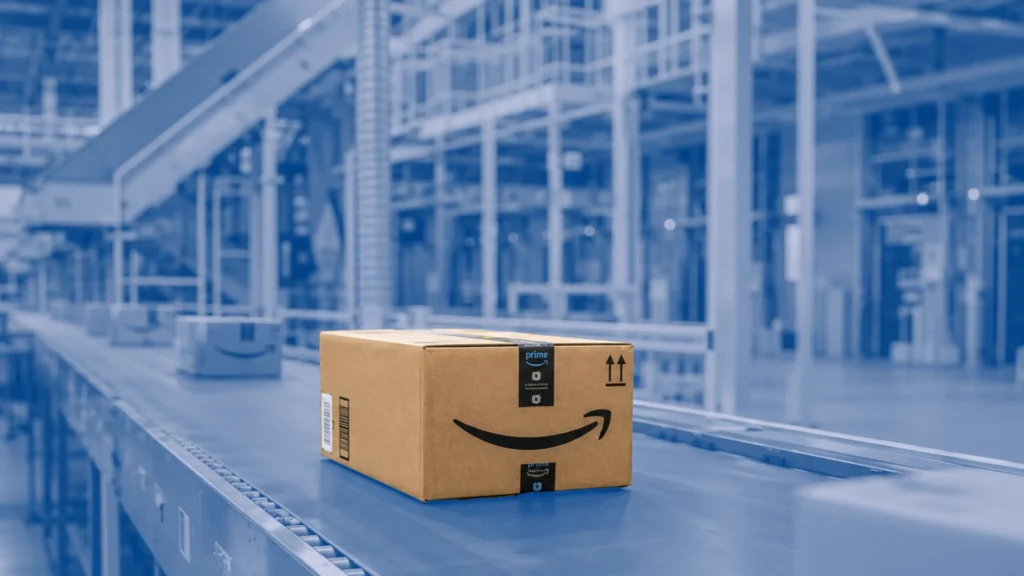
Amazon recommends keeping at least 28 days of inventory on hand for each ASIN, based on historical demand. After a deal event, that benchmark becomes a useful starting point, because most post-event inventory decisions are made on the wrong assumption: that demand ends when the discount does. It does not. Prime Day 2026 ran June 23 to 26, and by late July the brands paying attention are not asking how much they sold. They are asking whether they kept enough momentum to capture the demand the event created. The event ends before the demand it created does, and how a brand handles the weeks after determines whether the traffic spike turns into durable growth or just a spike. This article covers why demand continues after an event, the mistake that wrecks most post-event inventory plans, and exactly what to audit in July before back-to-school and Q4 stack on top of it. Why Does Demand Continue After a Sales Event? Demand continues after a sales event because the event creates effects that do not disappear at midnight when the deal ends. There are three worth understanding, because each one calls for a different inventory response. High-intent shoppers are still deciding During the event, some shoppers visited the product page without buying, added the item to a cart, compared alternatives, or discovered the brand for the first time. Others bought a bundle or a hero SKU but have not yet seen the rest of the catalog. That produces a post-event conversion tail: shoppers who convert in the days after the promotion ends. Amazon Ads recommends reengaging warm leads in the week after the event with messages like Still in stock or Bundle deal still live. Operationally, that is also the moment to guide event traffic toward core, complementary, or replenishable products. The event can lift product visibility temporarily A sharp increase in traffic and sales can leave an ASIN with more recent conversion history, more branded searches, more new buyers, and better campaign data. There is no official Amazon guarantee that Prime Day raises organic rank for a set number of days, and claiming that would overstate it. But there is a clear commercial reason to protect availability: products with sufficient, well-distributed inventory tend to generate more sales because they can offer faster delivery. Running out of stock right after the event cuts off the commercial benefit of the traffic the event created. Prime Day 2026 pulled forward purchases that usually happen later This year’s June event pulled in demand across back-to-school, household essentials, personal care, home, kids’ products, and summer travel items. Grocery behaved more like a value-management category, with shoppers leaning toward lower-priced products. US online spending reached 26.4 billion dollars, up 9.3% year over year (Adobe Analytics). The National Retail Federation reported that 62% of back-to-school shoppers had already started buying by early July, and 54% bought during June events like Prime Day specifically for school-related purchases. That means the post-event forecast should not assume a vertical drop. Some categories will see a real halo. Others will dip because the event pulled future sales forward. The Most Common Mistake: Treating Event Velocity as Your New Baseline The mistake that wrecks post-event inventory planning is using the event’s sales velocity as the new normal. Picture a product that sells 20 units a day normally, 90 a day during Prime Day, and 32 a day in the two weeks after. Reordering against 90 is the obvious error. But snapping straight back to 20 and assuming the entire lift vanished is also wrong. The right way to decide replenishment is to separate four different velocities: Event velocity: sales driven by the discount and extraordinary advertising. This is not a planning number. Post-event velocity: sales in the weeks after the event while the halo continues. This is what tells you how much tail there is. Normalized velocity: the sustainable demand once the event effect fully dissipates. This is your real baseline. Forward demand: what is coming from seasonality, back-to-school, or Q4. This layers on top of the baseline. Amazon’s 28-day inventory benchmark helps frame the decision, because the answer sits between two extremes. You do not empty inventory during the promotion and wait for the next cycle, and you do not carry the peak into your long-term forecast. You hold enough to serve the tail while you learn what the normalized number actually is. What Should Brands Audit in July? A focused July audit answers whether your post-event position is protecting momentum or quietly losing it. These are the five checks we run. Days of supply, measured two ways Do not look only at how many units remain. Calculate coverage under two scenarios: recent post-event velocity and pre-event normal velocity. With 800 units on hand, 40 daily post-event sales, and 25 historical daily sales, coverage is not simply one number. It is about 20 days if recent velocity holds and about 32 days if it returns to normal. That range changes how urgent replenishment is, and planning against only one number is how brands either stock out or overspend. Which ASIN actually produced the momentum Growth may have concentrated in a hero product, a bundle, a specific variation, or a single size or scent. Replenishing the whole catalog on the same logic produces excess inventory. The decision has to be per ASIN: the hero SKU needs immediate protection, slow variants may need liquidation, core products can benefit from cross-sell, and promotional bundles may not repeat their event velocity. Available-to-promise, not just total stock After an event, the dashboard may show stock that is not actually sellable because it is inbound, in FC transfer, reserved, stranded, under investigation, or sitting in locations that offer slower delivery. Look at available-to-promise, not the total physical count. Inventory location within the network affects the delivery promise, which affects conversion and how competitive your offer is. Featured Offer and delivery speed With the recent expansion of Featured Offer eligibility, more offers can enter the competitive pool. If a brand is left with low FBA inventory or a worse delivery promise than a reseller, it can lose share even while it still has units available. We covered that eligibility change in detail in Amazon Buy Box Changes 2026: Who Can Win the Featured Offer Now. Inventory momentum is not only avoiding a stockout. It is holding enough geographic distribution, competitive Prime delivery, consistent landed price, and stable availability to keep winning the placement. The low-inventory-level fee Amazon applies the low-inventory-level fee when both short-term and long-term historical days of supply fall below 28 days. In the 21-to-28-day band, the fee varies by size tier and shipping weight. For standard-size products, published examples range from 0.32 to 0.47 dollars per unit, with 0.36 applying to large standard items up to 3 lb. This creates real tension: too little stock triggers fees, lost velocity, and less competitive delivery, while too much becomes excess and aged inventory. The goal is not to send more inventory. It is to hold enough sellable inventory to protect conversion without carrying the event peak into the long-term forecast. The Other Risk: Overstock After the Event The opposite mistake is just as costly. Brands that shipped inventory aggressively before the event can end up holding slow variants, promotional