

Your sales on Amazon can look healthy while your margin quietly bleeds. Revenue is up, the dashboard is green, and the business feels fine, but the profit that should be arriving is not. The reason is almost never visible in a revenue report, because a revenue report measures what came in, not what leaked out along the way.
For brands already selling on Amazon US, this is the most common and most expensive blind spot we see. The growth is real, but so are the losses sitting underneath it: stranded inventory, resellers breaking your pricing, an account health issue nobody is watching, and traffic landing on listings that do not convert. None of those show up as a line that says margin lost here. They show up as a number that is lower than it should be, with no obvious explanation.
An audit exists to make those leaks visible. This article walks through what one actually finds, the kind of margin damage that hides behind steady revenue, and why the fix is usually faster than the slow drain that preceded it.
Why does your revenue report hide margin leaks?
A revenue report hides margin leaks because it is built to track sales, not to diagnose what sits between a sale and the profit it should produce. It tells you the top line moved. It does not tell you how much of that movement was eaten by waste, leakage, or inefficiency before it reached the bottom line.
This is the same gap we described in What Your Dashboard Isn’t Measuring. The metrics most teams watch, sessions, revenue, and blended ACoS, are real, but they summarize outcomes. They do not expose the mechanics underneath, and margin lives in the mechanics. A brand can hit its revenue target every month and still be losing meaningful profit to problems the report was never designed to surface.
An audit works differently. Instead of asking how much did we sell, it asks where is the money going that should be staying. That shift in question is the whole point, and it tends to surface four areas of leakage that revenue reporting routinely misses.
Leak 1: The operational waste draining your margin 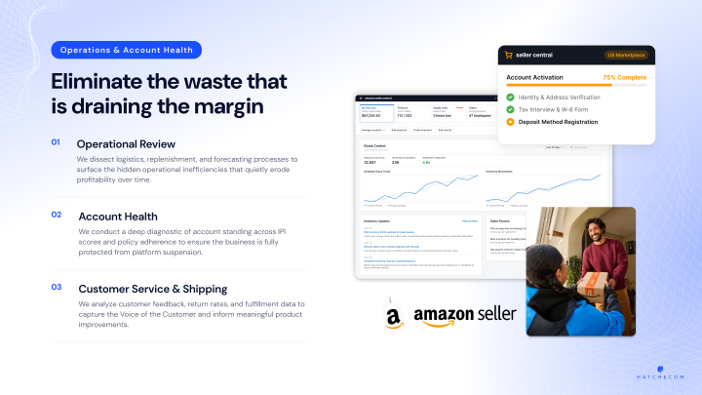
The first place margin disappears is in day-to-day operations, and it is the most common finding of any audit. Stranded inventory sitting in fulfillment centers, units below minimum stock that trigger fees, poor inventory turnover, and stock that has to be disposed of or returned all quietly subtract from profit without ever reducing revenue.
These are not dramatic failures. They are small, persistent inefficiencies that compound. A stranded-inventory report that nobody reviews, restock alerts that do not account for projected sell-through, storage fees climbing ahead of a peak nobody planned for. Individually each one looks minor. Together they can account for a surprising share of the margin a brand assumes it is keeping.
The inventory side of this is especially easy to miss after a demand spike, which is exactly what we covered in How Much Inventory Should You Keep After Prime Day 2026?. The principle holds year-round: inventory that is mispositioned, stranded, or misforecast is margin leaving the business through a door most dashboards never show.
Leak 2: The pricing and reseller problems eroding your brand control 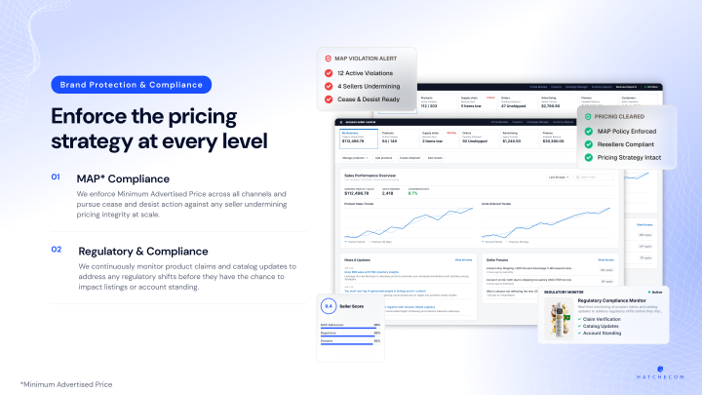
The second leak comes from losing control of your own pricing and catalog. When unauthorized resellers undercut your minimum advertised price, they do more than take a sale. They compress the price the whole market sees, erode the perceived value of the brand, and can pull you into a race to the bottom you never chose to enter.
An audit surfaces how many sellers are on your listings, how many are violating MAP, and how much of your Buy Box share is being contested by offers that should not be there in the first place. These are margin problems disguised as competition. Every sale lost to a non-compliant reseller, and every price cut made to stay competitive with one, is margin that leaves without appearing anywhere as a cost.
This connects directly to who actually wins the sale on a shared listing, which changed meaningfully this year. We broke down the mechanics in Amazon Buy Box Changes 2026: Who Can Win the Featured Offer Now. When more offers can compete for your placement, loose brand control stops being a minor annoyance and starts being a direct drain on margin.
Leak 3: The traffic you pay for that doesn’t convert

The third leak is paid traffic landing on listings that are not built to convert it. When you are spending on advertising to drive shoppers to a product page that does not close, you are paying full price for the click and recovering a fraction of its value. The spend shows up in the report. The wasted portion of it does not.
This is where visibility and content problems become margin problems. A listing that ranks but does not convert, a product page missing the information that closes the sale, or a catalog with weak SEO all mean the advertising budget works harder than it should to produce the same result. We mapped exactly where pages lose these shoppers in Why your Amazon product page isn’t converting the traffic you send it, and the efficiency logic is the same at the account level: every point of conversion you are missing is advertising margin spent to no effect.
The same is true of category placement. A product indexed in the wrong browse node fights the algorithm for visibility it should earn naturally, which raises the cost of every bit of traffic it does capture. We covered that specific leak in How to Change Your Amazon Browse Node and Recover Lost Rankings.
Leak 4: Not knowing where the brand actually stands
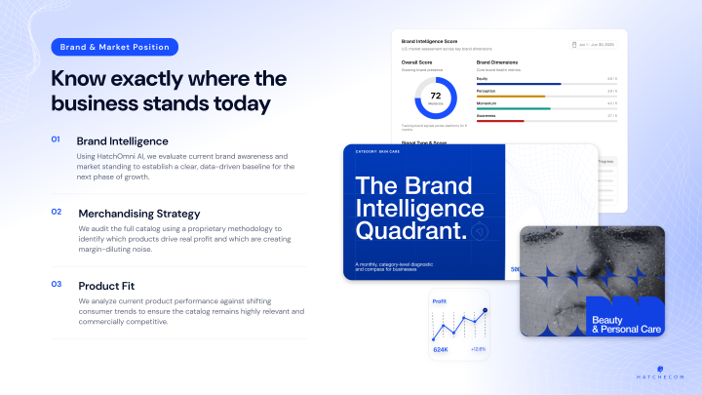
The fourth leak is the quietest, because it is a leak of information. Many established brands cannot say with precision where they stand in their category right now: how their brand authority compares to competitors, which SKUs are genuinely driving profit versus creating margin-diluting noise, and where their share of demand is slipping before it shows up in sales.
Without that picture, decisions get made on assumption instead of position. Budget goes to SKUs that feel important rather than the ones that actually earn, underperforming products stay in the catalog long after they should, and a slow erosion of category share passes unnoticed until it reaches revenue, by which point it is expensive to reverse. An audit establishes the baseline: a clear, current read of where the business actually is, so that the next decisions are made against reality rather than memory.
What does an Amazon audit actually do?
An Amazon audit is a structured diagnosis of where a selling business is losing money and growth that its standard reporting does not reveal. It is not a report card and it is not a dashboard. It is the process of looking in the specific places margin tends to hide and turning each finding into a decision.
In practice, that means examining four things in order. First, brand and market position, to establish where the business genuinely stands today. Second, compliance and brand control, to find the pricing, MAP, and reseller risks eroding value. Third, operations and account health, to eliminate the waste draining margin from the inside. And fourth, visibility and content, to close the gap between the traffic you pay for and the sales you actually capture.
The output is not a longer list of metrics. It is a short list of the leaks that matter most, ranked by what they cost, with a clear path to fixing each one. That is the difference between knowing your revenue number and understanding your business.
Frequently asked questions
How do I know if my Amazon business needs an audit?
If your sales are steady or growing but your profit margin is flatter than it should be, that gap is the signal. Other signs include rising storage or FBA fees, unexplained Buy Box losses, advertising spend that is not producing proportional returns, and an inability to say precisely which SKUs drive your profit. An audit is most valuable exactly when the top line looks fine, because that is when margin leaks hide best.
What is the difference between an Amazon audit and my regular reporting?
Regular reporting tracks outcomes like sales, sessions, and ACoS. An audit diagnoses the mechanics underneath those outcomes, specifically where margin and growth are being lost. Reporting tells you what happened. An audit tells you why your profit is lower than your revenue suggests it should be, and what to do about it.
What are the most common margin leaks on Amazon?
The four most common are operational waste such as stranded inventory and avoidable fees, loss of pricing and brand control from unauthorized resellers and MAP violations, paid traffic landing on listings that do not convert, and a lack of clear visibility into where the brand actually stands in its category. Each one subtracts from profit without appearing as an obvious cost in a revenue report.
Can an audit help a brand that is already profitable?
Yes, and often those are the brands with the most to gain. A profitable business can still be leaking a meaningful share of its potential margin to inefficiencies it has normalized. Because the business is working, no one is looking for the leaks, which is precisely why they persist. An audit finds the margin that profitability is hiding.
Steady revenue can hide an expensive problem
The hardest margin problems to fix are the ones that never announce themselves. A business that is losing profit to a failing launch knows it has a problem. A business losing the same profit to stranded inventory, reseller leakage, weak conversion, and slow category erosion often feels fine, because the revenue keeps arriving. The leak is invisible precisely because the top line is healthy.
That is what an audit is for: to see the business the way the revenue report cannot, and to turn the leaks it finds into a short list of fixes that compound. At HatchEcom, this diagnosis is where our Growth Team starts with brands that are already selling on Amazon and want to understand why their margin is not matching their growth.
If your sales look fine but your profit does not, book a call with the team and we will help you find where it is leaking.