
Functional beverages are becoming part of consumers’ everyday wellness routines.
The opportunity goes beyond adding protein, fiber, electrolytes, probiotics, adaptogens, or another trending ingredient to a drink. Consumers are looking for beverages that deliver a clear benefit while remaining enjoyable, convenient, and easy to incorporate into daily life.
That combination matters.
A beverage can promise hydration, digestive support, energy, focus, relaxation, or recovery. But it still needs to taste good, fit for a recognizable consumption occasion, and communicate its value clearly enough to earn consumer trust.
Recent data from the United States and Europe shows that wellness is influencing beverage decisions across both markets. It also reveals meaningful differences in how consumers experiment, evaluate claims, and decide whether a functional product is worth its price.
For brands operating in food, beverages, supplements, or wellness, understanding these differences can shape everything from product development and packaging to Amazon listings, retail positioning, advertising, and long-term growth.
What Are Functional Beverages?
Functional beverages are drinks formulated or positioned to provide benefits beyond basic refreshment or hydration.
The category can include:
- Protein coffees and ready-to-drink shakes
- Prebiotic, probiotic, or fiber sodas
- Electrolyte and hydration drinks
- Energy and focus beverages
- Adaptogenic or nootropic drinks
- Fortified waters
- Drinks positioned around sleep, digestion, immunity, or recovery
Their growth reflects a broader change in consumer behavior: people increasingly want wellness solutions that fit into habits they already have.
Drinking a coffee, soda, sparkling water, or ready-to-drink shake requires less behavioral change than introducing another complicated step into a daily routine. Familiar beverage formats can make new ingredients feel more accessible and easier to understand.
This is one reason ingredients traditionally associated with powders, capsules, and supplements are appearing in mainstream beverage formats.
Why Are Functional Beverages Growing in the United States?
Wellness already has a direct influence on how Americans choose beverages.
According to Keurig Dr Pepper’s 2025 State of Beverages report, based on research that included 4,031 U.S. adults who consume beverages, 66% seek drinks that improve their physical health. Another 82% said their favorite beverages help restore their mental well-being.
These findings show how broadly consumers now define the role of a drink.
A beverage can be part of a morning ritual, hydration routine, workout, workday focus habit, or social occasion. In each context, consumers may expect a different emotional or functional outcome.
Younger consumers are accelerating this experimentation.
The same State of Beverages research found that 72% of U.S. Gen Z consumers try a new beverage every month, compared with 44% of Americans overall. Gen Z consumers are also more likely to customize their beverages and use drink choices as a form of personal expression.
For beverage brands, this creates room for:
- Unexpected flavor combinations
- New ingredient formats
- Personalized consumption rituals
- Limited-edition releases
- Visually distinctive packaging
- Products built for specific moods and occasions
Beverage choice is increasingly connected to identity. The drink someone carries into the office, gym, college campus, or social event can communicate something about how that person wants to feel and be perceived.
Taste Still Determines the First Purchase
Consumers may be actively looking for wellness benefits, but flavor remains the strongest entry point.
Keurig Dr Pepper found that 59% of Americans said new flavors motivate them to try a beverage. By comparison, 29% cited low or zero sugar and 28% cited physical health benefits.
The 2025 IFIC Food & Health Survey reinforces this hierarchy. Among Americans, taste remained the leading food and beverage purchase driver, followed by price, healthfulness, and convenience.
This has an important strategic implication.
Functionality can increase relevance, strengthen the value proposition, and help justify a premium price. Flavor creates the desire to try the product and, eventually, to purchase it again.
A strong functional beverage concept needs to answer two questions at the same time:
- What relevant benefit does this product provide?
- Will consumers genuinely enjoy drinking it?
The brands that solve both questions have a better chance of moving beyond curiosity and becoming part of a repeatable routine.
Which Functional Benefits Are Most Relevant to U.S. Consumers?
The way Americans define healthy food provides clues about the beverage categories with the strongest potential.
According to IFIC’s 2025 research on how Americans define healthy food, consumers frequently associate healthfulness with protein, lower sugar, nutrients, minimal processing, freshness, and fiber.
These preferences support several areas of innovation:
- Protein coffees and ready-to-drink shakes
- Prebiotic and fiber sodas
- Low-sugar hydration products
- Electrolyte beverages
- Nutrient-dense ready-to-drink products
- Beverages designed around energy or recovery occasions
The opportunity becomes stronger when the benefit is specific enough to understand quickly.
“Made with functional ingredients” is abstract.
“Five grams of fiber in an afternoon sparkling drink” gives consumers a clearer benefit, format, and moment of use.
Premium Functional Beverages Need to Make Their Value Visible
Functional products frequently carry higher prices because of ingredient costs, specialized formulations, manufacturing processes, or premium positioning.
There is consumer openness to that premium. The 2025 State of Beverages report found that 46% of U.S. consumers are willing to pay more for beverages they consider premium, associating premium products with better ingredients, higher quality, and attractive packaging.
That willingness also creates a higher communication standard.
Consumers need to understand what makes a beverage premium before purchasing it. Packaging, product imagery, ingredient explanations, benefit hierarchy, and consumption guidance all contribute to that perception.
This becomes especially important in ecommerce, where shoppers cannot taste the product before buying it.
A premium functional beverage needs to make the following information immediately clear:
- What the main ingredient is
- What function it supports
- How much is included
- What the beverage tastes like
- When it should be consumed
- What makes the formulation different
- Why the product is worth the additional cost
The ingredient may create the product’s differentiation. The complete shopping experience makes that differentiation commercially meaningful.
How Does the European Functional Beverage Consumer Differ?
European consumers also show a strong interest in healthier choices, although affordability, trust, and habit change play a larger role in adoption.
A 2026 EIT Food Consumer Observatory study, involving 19,954 consumers across 18 European countries, found that 51% want to eat more healthily. Affordability and difficulty breaking existing habits remain two of the largest barriers preventing consumers from acting on those intentions.
Within functional beverages, Millennials appear to be among the most receptive audiences.
According to Innova Market Insights’ analysis of functional beverages in Europe, nearly half of European Millennials believe functional ingredients can support mental health. Across all generations, confidence falls to 43%.
That gap signals an education challenge.
Interest exists, but brands need to give consumers enough clarity and credibility to act on it. New ingredients, broad wellness promises, or unfamiliar terminology can create skepticism instead of purchasing intent.
Innova identifies naturalness, affordability, clear functional benefits, relevant consumption occasions, and product trial as important factors for turning interest into adoption.
The strongest European positioning will connect function with a practical and recognizable need.
Consumers may associate hydration with walking or lighter activity, while energy becomes more relevant during intense exercise. Activities such as gym sessions, yoga, dancing, or individual sports may create demand for a combination of hydration, energy, and recovery.
These specific occasions give brands a more tangible story than a broad promise of “better wellness.”
Price Sensitivity Does Not Eliminate the European Opportunity
European consumers are value-conscious, but additional nutritional benefits can still support a premium when the product makes that value credible.
According to NIQ’s analysis of UK health and wellness consumers, 66% of UK shoppers consider themselves proactive in improving their health and wellness, although British consumers also show particularly strong budget sensitivity.
Even so, 60% said they were willing to pay more for products with additional nutritional benefits, including added vitamins or fiber.
The key is that premium pricing needs to feel earned.
A functional beverage can justify a higher price when consumers can identify the ingredient quality, understand the intended benefit, and connect the product to an actual need.
Ambiguous claims and unfamiliar ingredients create more friction in price-sensitive markets. For brands entering Europe, education should be built into the product, packaging, and content strategy from the beginning.
Trust Is Becoming the Deciding Factor Across Both Markets
The most significant tension in wellness is that demand for functional products is increasing at the same time as skepticism toward health claims.
The NIQ 2025 Global State of Health & Wellness report surveyed nearly 19,000 consumers across 19 countries and found that 53% planned to purchase more high-fiber foods. Around 40% expected to buy more superfoods, high-protein plant-based foods, or probiotic foods.
At the same time:
- 82% wanted health and wellness labels to be more transparent and easier to understand.
- 62% were skeptical of health claims made by food companies.
Consumers are actively seeking benefits while evaluating those benefits more critically.
Effective functional beverage communication should help them understand:
- What the ingredient does
- Why it is included
- How much the product contains
- When the beverage should be consumed
- What evidence supports the benefit
- How the product fits into a broader routine
Specificity builds confidence.
Clear and consistent information also helps a product become easier to interpret across retail platforms, traditional search engines, and AI-generated answers. As explained in HatchEcom’s guide to AI Visibility and brand discoverability, AI systems depend on consistent descriptions, clear semantic associations, trustworthy references, and accessible product information to understand which brands are relevant to a category.
For functional beverage brands, this means that ingredient names, product benefits, consumption occasions, and category positioning should remain consistent across the website, Amazon listings, retail partners, social channels, and external coverage.
Why Amazon Matters for Functional Beverage Brands
Amazon is an important channel for functional beverages because it brings discovery, comparison, education, purchase, and replenishment into the same environment.
According to Amazon’s grocery selling guide, groceries and household essentials generated $100 billion in gross sales in Amazon stores during 2024. In the first quarter of 2025, everyday essentials represented one out of every three units sold in the U.S. Amazon store.
The channel is particularly relevant for consumable products because satisfied customers may purchase them repeatedly. Amazon identifies the replenishable nature of grocery products as a source of long-term sales potential.
For functional beverage brands, however, being available on Amazon is only the starting point.
Amazon has its own economics, content structure, search behavior, review ecosystem, and conversion dynamics. Brands therefore need a strategy adapted specifically to Amazon rather than a direct copy of their DTC playbook.
A new beverage may enter the marketplace with:
- No sales history
- Few or no reviews
- Limited category authority
- An unfamiliar ingredient
- A price above conventional beverages
- A benefit consumers do not immediately understand
The product detail page needs to overcome those barriers before advertising can work efficiently.
Driving more traffic to an unclear listing rarely solves the problem. Before increasing media investment or expanding the catalog, brands need to fix the Amazon foundations that determine whether traffic converts: PDP quality, keyword intent, trust signals, and a sustainable growth flywheel.
What Should a Functional Beverage Amazon Listing Explain?
A strong Amazon listing needs to translate the product formulation into a fast and confident purchase decision.
The main image earns the click, but the rest of the product’s detail page needs to answer the questions a shopper would normally ask while holding the product in a physical store.
For a functional beverage, that means showing:
- The package format and quantity
- The flavor and expected taste profile
- The main functional ingredient
- The amount included per serving
- The intended consumption occasion
- Nutrition facts and relevant product attributes
- Preparation instructions, when applicable
- The differences between available flavors or formulas
Every visual that follows the main image should help shoppers understand the flavor, benefit, format, and consumption occasion within seconds. This is why Amazon visual optimization should be treated as a conversion strategy, rather than a purely creative exercise.
The content also needs to follow Amazon’s current catalog structure.
Following Amazon’s July 27, 2026, product title update, non-media product titles are limited to 75 characters. Brands now need to decide which information is essential for product identification, and which details belong to Item Highlights, bullet points, images, structured attributes, and A+ Content.
HatchEcom’s guide to the Amazon Product Title Update 2026 explains how brands can reorganize their content hierarchy around the new limit.
For functional beverage products, the title may need to prioritize:
- Brand
- Product type
- Primary ingredient or defining attribute
- Flavor
- Pack quantity
Supporting benefits, recommended occasions, secondary attributes, and detailed ingredient education can then move into the remaining content fields.
The listing still needs to balance search visibility with human clarity.
Keywords can help a product appear for relevant searches such as “fiber soda,” “electrolyte drink,” “protein coffee,” or “low sugar hydration.” But the page must also explain why this product deserves attention.
How Can A+ Content Support Functional Beverage Conversion?
Amazon’s A+ Content capabilities give registered brands additional space to educate shoppers through enhanced imagery, text, videos, comparison charts, Brand Story content, and Q&A modules.
For functional beverages, A+ Content can be used to explain:
- How the key ingredient works
- How the product fits into a daily routine
- What each flavor tastes like
- When to consume the beverage
- How formulas or products differ
- Why the brand selected specific ingredients
- Which option is most relevant to each consumer need
A comparison chart can help shoppers choose between hydration, energy, digestion, or recovery products. A visual consumption guide can connect the beverage to morning, workout, afternoon, travel, or evening occasions.
The objective is to reduce uncertainty.
When a shopper is considering an unfamiliar ingredient or a premium multipack, unanswered questions can quickly become reasons to leave the page.
Amazon Strategy Should Connect Trial with Repeat Purchase
Functional beverage economics can be challenging when a single unit has a low selling price, but meaningful fulfillment, packaging, and advertising costs.
Multipacks, variety packs, and bundles can help brands introduce flavors, increase average order value, and create more sustainable unit economics. Amazon’s grocery category guidance specifically identifies multipacks and bundles as options for increasing order value and improving profitability.
A variety of packs can also reduce the uncertainty surrounding flavor.
Consumers interested in the benefit may hesitate to commit to twelve units of one unfamiliar flavor. A mixed pack gives them a way to explore the brand and identify the option they may later repurchase.
The Amazon strategy should therefore consider the entire customer journey:
- Discovery: The product appears for a relevant need or ingredient.
- Education: The listing explains what the beverage does and when to use it.
- Trial: The pack format makes the first order feel reasonable.
- Experience: Flavor and convenience deliver on the expectation.
- Replenishment: The consumer has a simple path to buy again.
Each stage needs to support the next.
Reviews and customer feedback should also shape the next iteration of the product and its marketplace strategy.
The language shoppers use to describe flavor, sweetness, texture, packaging, convenience, and perceived value can reveal which messages belong in the listing and which barriers still need to be addressed. HatchEcom explores this process further in its guide to using customer feedback to shape ecommerce growth strategies.
For functional beverage brands, feedback can help answer questions such as:
- Do consumers understand the functional benefit?
- Are taste expectations aligned with the actual experience?
- Does the pack size feel appropriate for the price?
- Which consumption occasions appear most frequently in reviews?
- Which objections should be answered more clearly in the PDP?
- Which flavors or formats should be developed next?
The goal is to turn customer language into clearer content and stronger product decisions.
Amazon Content Should Be Tested, Not Assumed
Consumer preferences can vary by flavor, benefit, audience, package size, price point, and occasion.
Amazon’s Manage Your Experiments tool allows eligible registered brands to test different versions of titles, images, bullet points, product descriptions, and A+ Content.
For a functional beverage brand, useful experiments might include:
- Leading with flavor versus leading with the functional benefit
- Showing the product alone versus showing the consumption occasion
- Comparing ingredient education with lifestyle-led imagery
- Testing “daily hydration” against a more specific workout use case
- Comparing a single-benefit message with a broader wellness proposition
This is especially important because consumer research shows that flavor drives trial while functionality helps explain the product’s value.
The best message may be a combination of both, but the balance should be tested using actual marketplace behavior.
ARMRA Shows How Supplement Ingredients Are Entering Everyday Beverage Formats
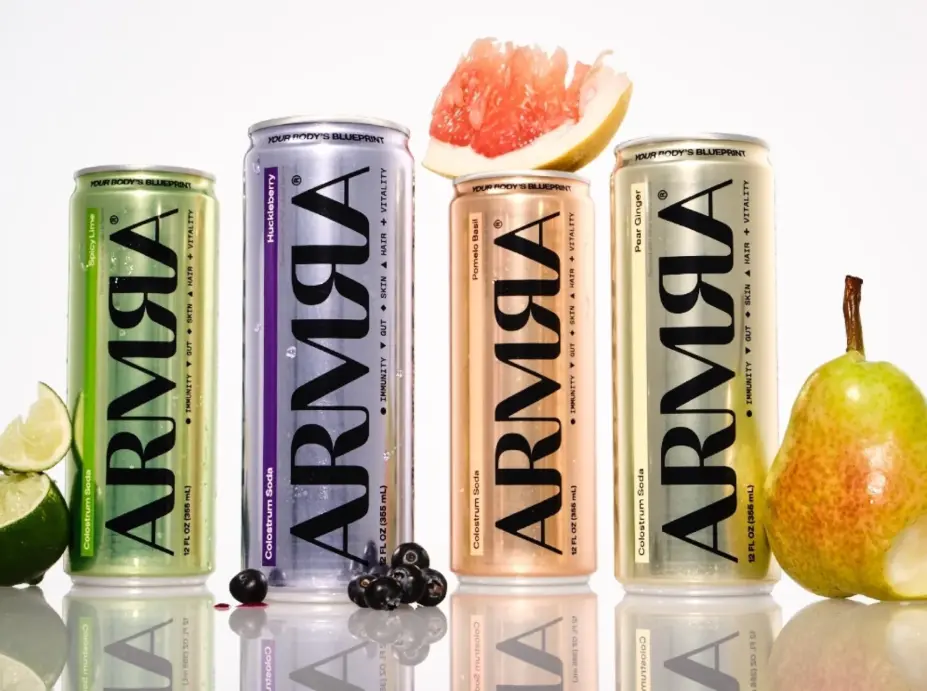
ARMRA’s expansion into ready-to-drink colostrum soda is one recent example of this broader movement.
The product takes an ingredient associated with supplements and places it inside a familiar carbonated beverage format. The brand’s launch communication emphasizes both the colostrum formulation and the importance of creating a flavor experience that fits naturally into the consumption moment.
The strategic significance is the format.
Consumers no longer need to scoop, measure, or mix the ingredient. The ARMRA Colostrum Soda Variety Pack creates more possible occasions: at home, after a workout, while traveling, or in a social setting.
This does not make ARMRA the entire functional beverage story. It makes the brand a useful example of a wider category movement:
Ingredients traditionally sold as supplements are moving into beverages that feel convenient, familiar, and easier to consume.
What Should Functional Beverage Brands Prioritize?
The next phase of category growth will come from products that connect wellness with real consumer behavior.
Five priorities stand out:
Lead with a Clear Need State
Hydration, protein intake, digestive wellness, energy, focus, relaxation, or recovery gives consumers a recognizable reason to buy.
Make Flavor Part of the Innovation Strategy
A strong benefit may create interest. An enjoyable taste supports repeat purchase.
Build the Product Around an Occasion
Morning, post-workout, afternoon energy, travel, socializing, or evening relaxation makes the proposition easier to understand.
Explain the Formulation with Precision
Ingredient quantities, sourcing, processing, evidence, and usage instructions help turn broad claims into credible information.
Design for the Marketplace from the Beginning
Packaging, pack size, shelf life, product imagery, listing content, price, fulfillment, advertising, and repeat-purchase economics should be considered before the Amazon launch.
Frequently Asked Questions About Functional Beverages
What Is Driving the Growth of Functional Beverages?
Consumers increasingly want products that support a specific wellness objective while fitting naturally into their routines. Common objectives include hydration, energy, digestion, protein intake, focus, relaxation, and recovery.
Are Health Benefits More Important Than Taste?
Health benefits influence consideration and help justify the purchase, but taste remains the strongest driver of trial. A functional beverage needs to deliver both a relevant benefit and an enjoyable drinking experience.
Which Generations Are Driving Functional Beverage Growth?
Gen Z is leading beverage experimentation in the United States, while Millennials show particularly strong openness to functional ingredients in Europe.
Which Functional Beverage Categories Have the Strongest Potential?
Categories connected to clear consumer needs have strong potential. These include protein beverages, fiber and prebiotic sodas, electrolyte products, low-sugar hydration drinks, energy beverages, and ready-to-drink nutritional products.
Why Is Transparency Important for Functional Beverage Brands?
Consumers want wellness benefits but increasingly question unsupported health claims. Transparent labels, specific ingredient information, clear usage guidance, and credible evidence help reduce uncertainty and build trust.
How Do U.S. and European Functional Beverage Consumers Differ?
U.S. consumers show strong experimentation, customization, and openness to premium beverages. European consumers also prioritize health but place greater emphasis on affordability, naturalness, proof, and clear benefit explanations.
Why Is Amazon Important for Functional Beverage Brands?
Amazon allows consumers to discover, compare, research, purchase, and repurchase products within the same platform. It can be particularly valuable for replenishable beverages, but success depends on strong product economics, complete listings, educational content, reliable fulfillment, reviews, and continuous testing.
What Should a Functional Beverage Amazon Listing Include?
The listing should clearly communicate the flavor, package quantity, main ingredient, amount per serving, intended benefit, usage occasion, nutrition information, and differences between available products or formulas.
Can Supplement Brands Successfully Expand into Beverages?
Yes, when the beverage creates a meaningful and convenient new consumption occasion. The format should make the ingredient easier to use while preserving credibility, product quality, and an enjoyable taste experience.
Final Thoughts on Functional Beverage Growth
Functional beverages are growing because they make wellness easier to integrate into everyday life. For brands, the opportunity is to build a product that consumers understand quickly, enjoy repeatedly, trust enough to recommend, and can easily find again when they are ready to repurchase.
At HatchEcom, we help food, beverage, and wellness brands translate consumer behavior into stronger Amazon positioning, conversion-focused content, marketplace operations, advertising, and scalable growth.
Planning to launch or grow a functional beverage brand on Amazon? Let’s talk.